Where Waikiki sits on Oahu
Waikiki is a neighborhood inside the city of Honolulu, not a separate town and not the island itself. The beach runs roughly 2.5km along the south shore, from the lawns of Kapiolani Park in the east to the mouth of the Ala Wai Canal in the west, with the canal cutting Waikiki off from the rest of the city like a moat. Everything sits within that narrow strip: the hotel towers along Kalakaua Avenue, the quieter guesthouses on Kuhio Avenue a block inland, and the beach itself, which is really several connected sections — Kuhio Beach, Queens, Fort DeRussy, Kaimana — each with slightly different sand, crowd and surf.
The location is convenient in both directions. Diamond Head, the extinct volcanic crater that appears in most postcards of the area, is a 15-20 minute walk or a short drive east, past Kapiolani Park. Downtown Honolulu, Chinatown and the Iolani Palace are 15-20 minutes west by car or TheBus, and Ala Moana Center — the open-air mall most locals actually shop at — sits between the two, about a 10-minute bus ride or a 30-40 minute walk from central Waikiki. Honolulu’s airport, HNL, is roughly 10km away, 20-30 minutes by car depending on traffic.
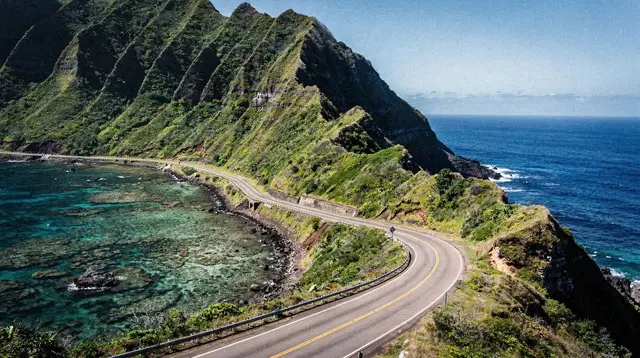
None of this makes Waikiki representative of Oahu. It is an urban resort strip on an island of about 1,545 square kilometers that also holds a dormant volcanic crater, a working military harbor, a rainforest interior, and a north-facing coast that turns into some of the biggest rideable surf in the world every winter. Waikiki tells you almost nothing about the North Shore or the Windward Coast, and treating a week at the beach as “seeing Oahu” is the single most common misread of this island. For the full picture, see the Oahu overview.
Who Waikiki actually suits
Waikiki works well for a first Oahu trip, because it removes decisions: the beach, restaurants, a grocery store, a pharmacy and the start of most tours are within a 10-15 minute walk of nearly any hotel in the district. It suits families with young kids, since the reef offshore breaks up the swell and keeps much of the water calm enough for wading and beginner surf lessons. It suits anyone who does not want to rent a car: TheBus, the Skyline rail extension toward the airport and Pearl Harbor, ride-hailing apps and the Biki bikeshare network all reach useful places from here without ever renting a vehicle — see getting around Oahu.
It suits it less well if the trip’s real goal is the North Shore’s winter surf scene, quiet time in Kailua’s turquoise water, or several days of hiking away from the city — those are day trips from Waikiki at best, not things Waikiki delivers on its own. Waikiki is also not the budget option: it is Oahu’s most expensive base per night, and resort fees (below) add to that before a single meal is bought. For a side-by-side against the island’s main alternative base, see Waikiki vs Ko Olina; for how many nights to actually plan, how many days on Oahu.
Resort fees: check before you book
Most hotels in Waikiki charge a resort fee on top of the room rate, billed per night and rarely shown in the headline price a booking site displays. It typically covers things like WiFi, beach chairs, gym access or a bottle of water, whether or not a guest uses any of it. The amount varies by property and changes without much notice, so this page will not quote a figure — read the fine print on the specific hotel’s booking page before confirming, and expect it to add a noticeable amount to the nightly cost. The same caution applies to parking: hotel self-park and valet in Waikiki both run expensive, and for a stay confined to this neighborhood, a rental car is rarely worth carrying that cost. Background on both: resort fees and hidden costs and tours vs rental car on Oahu.
As with the rest of the island, prices quoted anywhere on this site are before Hawaii’s general excise tax and, for lodging, the added transient accommodations tax — together closer to 18-19% on a hotel night than the roughly 4.5% on a meal or activity.
Getting around from Waikiki
| Mode | Good for | Notes |
|---|---|---|
| Walking | Beach, Kapiolani Park, restaurants, shops | Most of Waikiki is walkable in 15-20 minutes end to end |
| Biki bikeshare | Short hops within Waikiki and into downtown Honolulu | About 130 stations islandwide; check current pricing at gobiki.org |
| TheBus | Ala Moana, downtown, Pearl Harbor, even the North Shore | Slow but genuinely useful; fares and passes at thebus.org |
| Skyline rail | Airport and Pearl Harbor direction | Two segments open; does not yet reach Waikiki directly, connects via bus |
| Rental car | North Shore, Windward Coast, circle-island day | Not needed for Waikiki itself; hotel parking is expensive |
| Rideshare/taxi | Airport transfers, late-night trips | Simplest option for a single one-off trip |
Biki bikes are a genuinely practical way to move around the neighborhood and reach nearby Ala Moana or downtown without a car; see Biki bikeshare Honolulu for how the system works. For arriving from HNL, HNL to Waikiki options compares the shuttle, rideshare and rail-plus-bus routes.
What’s within easy reach
Waikiki’s real advantage is as a launch point. Pearl Harbor and its memorials sit about 30-40 minutes away by car or tour bus, and nearly every Pearl Harbor tour departs from a Waikiki hotel pickup point — see the Pearl Harbor tours guide and Pearl Harbor from Waikiki transport for how that works, including the reservation system that governs entry to the USS Arizona Memorial. One practical option:
a half-day tour from Waikiki combining the USS Arizona Memorial with a Honolulu city drive, or the longer full Pearl Harbor experience tour covering the Arizona, Missouri and Bowfin sites.
Diamond Head’s hiking trail is close enough to reach on foot, though same-day permits are limited — details on the Diamond Head destination page. For a full day away from the beach, a circle-island tour run out of Waikiki covers the North Shore and Windward Coast in a single loop, useful for visitors without a car and short on time:
Evenings in Waikiki commonly involve a luau, and several operators run shows within or just outside the district — see best luaus on Oahu and luau what to expect before booking. One based right in Waikiki:
an evening luau dinner show held in Waikiki.
Those who want to go further afield — the reef at Hanauma Bay, the resort lagoons of Ko Olina in the dry west, or the far side of the island — can start planning from things to do on Oahu or the destination-by-destination Oahu overview, and check where to stay on Oahu if splitting nights between more than one base.
Waikiki’s beaches, section by section
“Waikiki Beach” is really several connected stretches, and which one suits a visit depends on what’s wanted. Kuhio Beach, toward the Diamond Head end near the Duke Kahanamoku statue, is the most crowded and the most protected — a low breakwater keeps the water calm, which is why it’s a common spot for beginner surf lessons and for families with young kids; more family-focused beach options across the island are compared in family-friendly beaches on Oahu. Queens Beach, in front of the Royal Hawaiian and Moana Surfrider, is the classic postcard stretch and the busiest by mid-morning. Fort DeRussy, at the western end near the Hilton Hawaiian Village, has more open sand and less foot traffic, since it fronts a military recreation area rather than a row of hotel towers.
Kaimana Beach, past Kapiolani Park at the Diamond Head end, is the quietest of the four, popular with locals doing morning swims rather than with tour groups, and it’s where the water starts to deepen quickly rather than staying shallow for long stretches. None of these beaches involves surf big enough to trouble an average swimmer — the reef running the length of Waikiki breaks up most incoming swell before it reaches the sand, which is also why the water supports paddleboarding, outrigger canoe rides and gentle snorkeling as much as it supports swimming; see water sports in Waikiki for what’s actually available beach-side.
Practical basics for a Waikiki stay
Hawaii uses the US dollar, and every price quoted anywhere on this site — activities, meals, tours — is before tax. Oahu’s general excise tax runs about 4.5% on goods and services; a hotel night in Waikiki adds the separate transient accommodations tax on top, for a combined lodging tax closer to 18-19%, before any resort fee. Visitors from visa-waiver countries need an approved ESTA before arrival, not a visa. Emergency services (police, fire, ambulance) answer at 911, same as the rest of the United States. Driving is on the right, as on the US mainland, and road signs use miles and Fahrenheit rather than kilometers and Celsius. Hawaii sits in the HST time zone (UTC-10) and does not observe daylight saving, so its offset from the US mainland shifts by an hour depending on the season there.
Sun protection is worth planning for before arrival: since January 1, 2021, Hawaii state law has banned the sale of sunscreens containing oxybenzone or octinoxate, both linked to coral reef damage, so a sunscreen bought at home may not be sold here and won’t necessarily match what’s stocked in Waikiki’s convenience stores — a reef-safe, mineral-based sunscreen is the safer bet to pack. The central Pacific hurricane season runs June 1 through November 30, overlapping with the drier, more popular travel months; storms that actually make landfall on Oahu are rare, but it’s worth knowing about when booking travel insurance.
What Waikiki does not have
There is no volcanic activity anywhere near Waikiki or anywhere on Oahu — the lava, the Kilauea crater and the black-sand beaches people associate with “Hawaii the volcano island” are all on the Big Island, a 45-minute flight away, not a day trip by car. Waikiki’s own beach is a managed, reef-protected strip, not a wild or remote one, and the big winter surf that makes headlines happens 45-60 minutes north at Pipeline and Waimea Bay, not in front of the hotels. Waikiki also is not where Oahu’s rural, green or agricultural character shows up — for that, the Windward Coast, North Shore and the island’s interior are the places to look, not this beach district.
Waikiki FAQ
Is Waikiki a good base for a first trip to Oahu?
Yes, for most first-time visitors. It puts the beach, restaurants, a grocery store and the pickup points for most island tours within walking distance, and it works without a rental car. It suits families and travelers who want convenience over remoteness, though it is Oahu’s most expensive lodging area per night.
Do all Waikiki hotels charge a resort fee?
Most do, but the amount and what it covers vary by property and change over time, so it is not something this page can quote as a fixed number. Check the specific hotel’s booking page for its current resort fee before confirming a reservation, and read it as separate from the room rate and from Hawaii’s lodging taxes.
How far is Waikiki from Pearl Harbor?
About 30-40 minutes by car or tour bus, depending on traffic. Nearly every Pearl Harbor tour operator picks up directly from Waikiki hotels, so a rental car is not needed for that trip specifically.
Can I get around Oahu from Waikiki without a rental car?
Within Waikiki and to nearby Ala Moana or downtown Honolulu, yes — walking, Biki bikeshare, TheBus and rideshare all cover it well. For the North Shore, Windward Coast or a full circle-island day, a rental car or a guided tour departing Waikiki are the two realistic options.
Is Waikiki representative of the rest of Oahu?
No. It is a compact, urban beach district. The rest of the island includes a dormant volcanic crater, a military harbor, a rainforest interior, and coastlines with very different scenery, water conditions and pace — see the full Oahu overview before assuming a Waikiki stay shows the whole island.
What’s within walking distance of Waikiki?
Kapiolani Park, the base of the Diamond Head hiking trail, Fort DeRussy, the Ala Wai Canal and most of Waikiki’s restaurants and shops are all walkable. Ala Moana Center and downtown Honolulu are a longer walk (30-40 minutes) or a short bus or bike ride.
When is the best time to visit Waikiki?
May through October is the drier season islandwide, with reliably warm days. December through March adds a chance of seeing humpback whales offshore. Waikiki’s own beach conditions stay fairly mild year-round because the offshore reef breaks up most swell, unlike the North Shore’s seasonal big waves.
Do I need a car to see Waikiki without missing anything?
No — Waikiki itself is fully walkable, and a car adds cost (parking, distance to anywhere useful) without adding much benefit for a stay confined to the neighborhood. For a full day exploring Waikiki on foot, by bike and by bus alone, see one day in Waikiki without a car.
What should I know about sun protection and the time zone before I go?
Hawaii has banned the sale of sunscreens containing oxybenzone and octinoxate since 2021 to protect the reef, so pack a reef-safe, mineral sunscreen rather than counting on finding a familiar brand locally. The islands run on Hawaii-Aleutian Standard Time (UTC-10) year-round, with no daylight saving changes, so the time difference from home shifts depending on the season elsewhere.