The best family-friendly beaches on Oahu
What is the safest beach on Oahu for young children?
Ko Olina's four artificial lagoons (35-45 minutes from Waikiki) offer the calmest, most enclosed water on the island, with lifeguards and almost no current. Kaimana Beach and Kuhio Beach in Waikiki are the best choices if you don't want to drive, thanks to reef protection and lifeguard towers a few steps from most hotels.
What actually matters for a family beach day
A beach that photographs well is not the same as a beach that is safe for a five-year-old. For families, the things that matter are the ones that rarely make it into a highlight reel: whether a reef or breakwater cuts the swell before it reaches the shore, whether a lifeguard tower is staffed and close enough to see, how far the parking lot is from the sand, whether there is shade for nap time, and whether the season changes the answer. Oahu has excellent beaches for children, but they are not interchangeable, and the same stretch of sand can be a gentle wading pool in July and genuinely dangerous in January. This guide compares the beaches families actually use, named against each other, with drive times from Waikiki and the specific conditions that make each one work or not work for young kids.
This page does not cover where to stay, what else to pack, or non-beach activities for a family trip — see Oahu with kids: where to stay, what to do, what to skip for that broader planning guide.
The comparison, at a glance
| Beach | Distance/time from Waikiki | Protection | Lifeguard | Shade | Parking & restrooms |
|---|---|---|---|---|---|
| Kaimana Beach (Sans Souci) | Walkable, edge of Waikiki | Reef edge breaks swell | Yes | Good, ironwood trees | Street parking only, restrooms in park |
| Kuhio/Queens Beach, Waikiki | 0 minutes | Sandy shelf, reef offshore | Yes | Minimal | Hotel lots (paid), public restrooms |
| Ala Moana Beach Park | 10-15 min | Enclosed by breakwater reef | Yes | Excellent, mature trees | Large free lot, restrooms |
| Ko Olina Lagoons | 35-45 min | Rock breakwaters, calmest water on Oahu | Yes | Limited on the sand | Small public lot, fills early; restrooms |
| Kailua Beach Park | 25-30 min | Open bay, gentle shorebreak | Yes | Some, near the park | Public lot, restrooms |
| Lanikai Beach | 25-30 min | Open water, no barrier | No | Minimal | No public parking |
| Waimanalo Beach Park | 30-35 min | Open bay, wide sandy bottom | Yes | Moderate | Public lot, restrooms |
| Hanauma Bay | 25-30 min | Reef-enclosed cove | Yes | Limited | Paid lot, reservation required |
| Waimea Bay / Sunset (summer only) | 45-55 min | None; calm only May-September | Yes (seasonal focus varies) | Minimal | Public lots |
Waikiki itself: no car needed
For families staying in Waikiki who don’t want to drive anywhere on day one, the beach is already there, and it’s better for kids than its reputation as a surf and cocktail strip suggests. Kuhio Beach and Queens Beach, in the center of Waikiki, sit behind a sandy underwater shelf and a series of low rock walls that break up incoming swell, which is why so much of the beginner surf instruction happens right there. Lifeguard towers are staffed daily, and hotels line the sand, so there’s no logistics beyond walking out the door. Shade is scarce, though, and midday sun on young skin needs real management.
At the quieter Diamond Head end, Kaimana Beach (also called Sans Souci, next to the Waikiki Aquarium) is the pick most local parents make. A reef edge just offshore breaks the swell, a lifeguard tower watches the swim area, and a line of ironwood trees gives shade close to the water — something Waikiki’s main strip doesn’t offer. It’s a 10 to 15 minute walk from central Waikiki hotels, longer than zero, but still no car required.
A short drive rather than a walk, Ala Moana Beach Park (10-15 minutes) is fully enclosed by an offshore reef and breakwater, making the water inside the swim area close to flat on most days. It has the best shade of any beach this close to Waikiki, a large free parking lot, and full restroom facilities — genuinely useful when a beach day runs from 9am to 3pm with a toddler.
Ko Olina: the calmest water on the island
Ko Olina, on the leeward coast near Kapolei, is built around four small artificial lagoons, each enclosed by a rock breakwater that keeps the open ocean’s swell and current almost entirely out. This is the closest Oahu gets to a swimming pool with sand, and it’s the answer for parents whose main worry is a strong current pulling a child off their feet. The lagoons have lifeguards, and the sandy entry is gradual rather than a drop-off.
The trade-off is distance and access. Ko Olina is 35 to 45 minutes from Waikiki by car, longer in H-1 traffic, and it is not realistic without a rental car or a booked tour — see Rental car and parking on Oahu: what it actually costs and Getting around Oahu without a rental car for the options. Public parking at each lagoon is limited and used first by resort guests, so arriving by mid-morning matters if you’re not staying on-site. Shade directly on the small lagoon beaches is limited; the resort landscaping nearby has more. For a side-by-side look at basing a trip near the lagoons versus staying in town, see Waikiki or Ko Olina: which side of the island to base yourself.
Windward side: Kailua Beach Park versus Lanikai
The windward coast is the greener, wetter side of the island, and its two best-known beaches sit right next to each other with very different setups for families.
Kailua Beach Park, about 25 to 30 minutes from Waikiki through the Nuuanu Pali tunnels, pairs turquoise water with the infrastructure families actually need: lifeguards, a large public parking lot, restrooms, and a wide, gently sloping sandy bottom close to shore. It’s the better choice of the two Kailua-area beaches for a family with young kids for exactly that reason — it’s set up to receive a beach day, not just to be photographed. Older kids and adults who want to get on the water can rent gear or book a guided paddle; see Kayak tours versus kayak rentals in Kailua and Kayaking Kailua and the Mokulua islets.
Lanikai, next door, is the postcard: finer sand, calmer-looking water, the Mokulua islets offshore. But it has no lifeguard, no public restrooms, and critically, no public parking — visitors park on residential streets where restrictions have tightened, and commercial kayak operators are directed to launch from Kailua Beach Park instead. For a family beach day with small children, Kailua Beach Park is the practical choice; treat Lanikai as a walk-to, look-at, or early-morning stop rather than the base for the day. Older kids who can handle a short, hot hike sometimes combine a Lanikai stop with the nearby Lanikai Pillbox hike for the view down onto the beach and islets.
Further southeast, Waimanalo Beach Park (30-35 minutes) gets less tourist traffic than Kailua, has a wide sandy bottom and generally gentle water, a lifeguard tower, and a public lot with restrooms — a reasonable alternative when Kailua’s lot is full, which it often is by late morning on weekends.
Hanauma Bay: better for snorkeling than for toddlers
Hanauma Bay, about 25 to 30 minutes from Waikiki on the southeast shore, is a reef-enclosed cove and one of the calmest, clearest patches of water on Oahu — but it’s built around snorkeling, not a relaxed beach day. It requires an online reservation opened 48 hours ahead at 7am Hawaii time, closes Mondays and Tuesdays, and charges an entry fee for non-resident visitors. The shoreline strip is narrow, and a mandatory 9-minute orientation video precedes entry.
For kids old enough to snorkel comfortably, it’s excellent; for a toddler who just wants to dig in the sand, the reservation hassle and crowding make it more effort than the other options on this list. Full logistics: Hanauma Bay reservations: how to book your entry. If Hanauma’s reservation window doesn’t line up with your trip, the best snorkeling beaches on Oahu and the broader Oahu snorkeling guide cover easier, no-reservation alternatives, several of which double as fine family beaches.
North Shore: only safe half the year
The North Shore’s beaches — Waimea Bay, Sunset Beach, and the stretch around Pipeline — are genuinely dangerous for children for roughly six months of the year and genuinely calm the other six. From about November through February, north Pacific swells push waves of 3 to 6 meters (10 to 20 feet) or larger onto these shores, producing powerful shorebreak and rip currents with no reef to soften the blow; this is when the world’s best big-wave surfers show up, and it is not a season for a family swim. From roughly May through September, the same beaches go flat and calm, and Waimea Bay in particular becomes a favorite with local families, its wide sandy bay and rope swing making it one of the better summer beach days on the island.
The rule for planning: never book a North Shore beach day for young kids without checking the season first, and never treat a calm-looking day in November as evidence that it’s safe. Ocean conditions there can shift within a single week; check North Shore surf season: when the waves turn on (and off) and the posted flag and lifeguard warnings before letting kids near the water, summer included.
Reading the water: what to check every time
Regardless of which beach, the same checks apply before kids go in past their knees:
- Lifeguard flags and posted signs. Oahu’s lifeguards post color-coded warning flags daily; a red or double-red flag means stay out, no matter how calm the surface looks.
- Reef or shelf versus open shorebreak. A visible line of foam a short distance offshore usually marks a protective reef edge (Kaimana, Waikiki, Hanauma Bay); its absence, as at Lanikai or the North Shore, means the full force of the swell reaches the sand.
- Rip currents. These show as a channel of choppier, discolored water moving away from shore, often between sets of breaking waves. They are the leading cause of ocean rescues on Oahu and can appear at otherwise calm-looking beaches.
- Sun exposure. Hawaii’s UV index runs high year-round; reef-safe sunscreen is required by state law since 2021 (no oxybenzone or octinoxate), and shade or rash guards matter more than sunscreen alone for a full beach day. See Hawaii’s sunscreen ban and what reef-safe actually means for which ingredients to check on the label before packing.
Booking a day that covers several beaches
Families who want to see more than one coast without driving and navigating themselves sometimes prefer a guided day. A guided circle-island route typically stops at a mix of the beaches above alongside other scenic points:
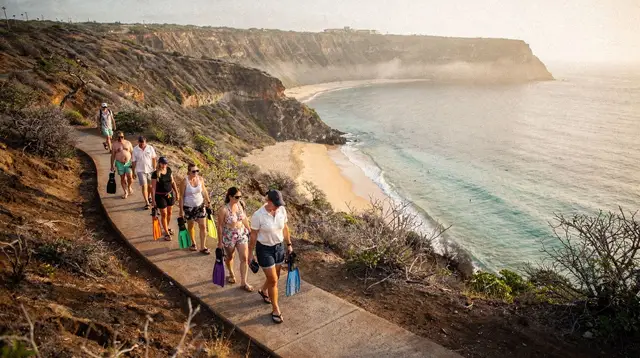
a full-day circle-island tour that stops at several of Oahu’s best beach spots covers the windward coast and North Shore lookouts in one guided day without the family needing to navigate the drive.
A shorter, more beach-focused option is a 6-hour guided day trip built around Oahu’s beaches and lesser-known coastal spots, useful for a half-day that still covers real ground.
For families with kids old enough for their first lesson, summer visits pair well with a North Shore surf lesson taught in the calmer summer conditions — only worth booking May through September, per the seasonal note above.
Winter visitors near Ko Olina sometimes combine a lagoon beach morning with a whale-watching trip departing from the west side near Ko Olina, since humpback season (November to May) overlaps with the calmest lagoon swimming of the year.
A realistic family beach itinerary
For a family based in Waikiki without a rental car, a workable pattern is: Kaimana or Kuhio Beach for easy mornings, Ala Moana Beach Park for a shaded, enclosed-water day, and one full day trip — by rental car or guided tour — out to Ko Olina or Kailua Beach Park for the calmer, more spacious option. Save the North Shore for a summer trip, or check conditions carefully if visiting in winter and treat it as a lookout stop rather than a swim day for young kids. It’s also worth reading Waikiki is not the whole island before locking in a beach-only plan — several of the best family beaches above sit outside Waikiki entirely.
For a full multi-day plan built around this pattern, see the five-day Oahu itinerary for families with kids, or how many days you actually need on Oahu if you’re still deciding on trip length. Families short on time can also adapt the two-day Oahu highlights itinerary, swapping in Kaimana or Ala Moana for the first day’s beach stop.
Frequently asked questions about Oahu’s family beaches
What is the safest beach on Oahu for young children?
Ko Olina’s four lagoons offer the calmest, most enclosed water on the island thanks to their rock breakwaters, with lifeguards on duty and a gradual sandy entry. For families without a car, Kaimana Beach in Waikiki is the closest equivalent, protected by a reef edge just offshore.
Which Oahu beach is closest to Waikiki and still safe for kids?
Kaimana Beach (Sans Souci) at the Diamond Head end of Waikiki is walkable from most hotels, has a staffed lifeguard tower, shade trees, and a reef edge that softens the surf. Kuhio and Queens Beach in central Waikiki also have lifeguards and a gentle sandy shelf, right outside most hotel doors.
Is Ko Olina good for toddlers?
Yes. The lagoons are largely enclosed by rock breakwaters, keeping the water calm on most days with a gradual sandy entry. It’s a 35 to 45 minute drive from Waikiki, and public parking is limited, so arriving by mid-morning matters.
Is Kailua Beach safe for kids, and what about Lanikai?
Kailua Beach Park has lifeguards, shallow water close to shore, and public parking and restrooms, making it a solid family choice. Lanikai next door has no lifeguard, no public restrooms, and no public parking, so it suits confident swimmers more than a family with young children.
Can we take young kids to the North Shore beaches?
Only from roughly May through September, when Waimea Bay and Sunset Beach are calm and popular with local families. From November through February, north-facing swells make the same beaches dangerous, with no reef to soften the shorebreak.
Is Hanauma Bay good for a family beach day?
It suits kids old enough to snorkel more than a relaxed beach day for toddlers. It requires a reservation made 48 hours in advance, is closed Mondays and Tuesdays, and its shoreline area is narrow and often crowded.
Do Oahu’s family beaches have lifeguards?
Waikiki’s main beaches, Kaimana, Ala Moana Beach Park, Kailua Beach Park, Hanauma Bay, and Waimanalo Beach Park all have staffed lifeguard towers during daylight hours. Lanikai and most North Shore beaches in winter do not have lifeguards watching a shallow swim zone.
Which family beach has the most shade?
Kaimana Beach and Ala Moana Beach Park both have mature trees close to the sand, useful for a full day with young kids. Ko Olina’s lagoon beaches have less direct shade, though some landscaped shade exists near the resorts.
Family-friendly tours on Oahu on GetYourGuide
Verified deep-linked GetYourGuide tours. Book through these links and we earn a small commission at no cost to you.
GetYourGuide does not provide a product photo for this activity — the image shows the meeting point, photographed by us.