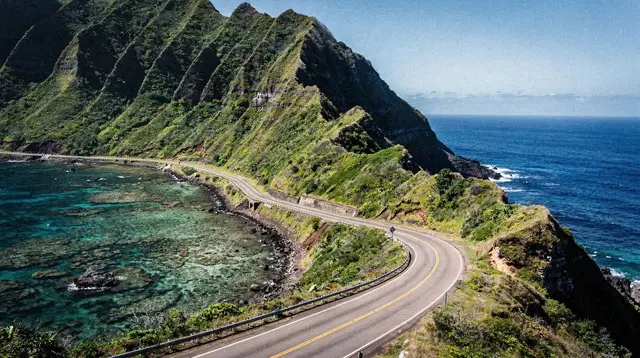
Two landmarks, one short stretch of coast
Southeast Oahu is the short run of coastline between Honolulu and the windward side, and in practice it means two things: Hanauma Bay for snorkeling and Koko Head for a steep hike up a decommissioned military tramway. Both sit roughly 20 to 30 minutes by car from Waikiki, past Diamond Head and Koko Crater, on the way to Hawaii Kai. There’s no town here, no hotel strip, no resort cluster — this is a day-trip zone, visited from a base in Waikiki or elsewhere in Honolulu, not a place to book a room.
That matters for planning. You come here for a specific activity, spend two to four hours doing it, and leave. The two sites also attract different travelers: Hanauma Bay is a family-friendly marine reserve with a hard reservation system, and Koko Head is a sweaty, sport-oriented climb with no reservation at all but real physical demands. Treat them as separate outings, even on the same day.
Hanauma Bay: reservations first, everything else second
Hanauma Bay Nature Preserve is a former volcanic crater, now a shallow, coral-lined bay that the state manages as a marine sanctuary rather than a public beach. That distinction drives every practical detail about visiting.
The bay is closed Monday and Tuesday, plus Christmas and New Year’s Day. This is not a maintenance quirk — it’s a deliberate rest period for the reef, and it’s the single most common reason visitors get turned away. Building a Monday or Tuesday morning into an Oahu itinerary and expecting to snorkel at Hanauma Bay is a planning mistake, not bad luck.
On the days it is open, Hanauma Bay runs Wednesday through Sunday, 6:45 a.m. to 4 p.m., and access is capped by a daily quota. Reservations open online 48 hours in advance at 7 a.m. Hawaii time, and popular slots — especially the first entry windows — sell out within minutes. There is no same-day or walk-in booking. If you haven’t reserved, plan to be disappointed at the gate rather than counting on a spot.
Budget for the visit: entry runs around $25 for visitors from outside Hawaii (children 12 and under, Hawaii residents, and active-duty military enter free), plus a $3 cash parking fee. Every visitor also sits through a mandatory nine-minute orientation video on reef safety before heading down to the water — it’s short, but it’s not optional, so build the extra time into your morning.
Inside the bay, the coral is real and the fish are used to people, which is exactly why the rules matter: no touching coral, no feeding fish, no standing on the reef. Snorkeling here suits beginners and kids well, since the bay is shallow and largely protected from surf, but it is still ocean water, not a pool — check conditions and stay aware of currents near the mouth of the bay.
a guided snorkel outing in a protected marine sanctuary, with gear and instruction handled for you is a straightforward way to skip some of the logistics if you’d rather not manage the reservation system and gear rental yourself.
What’s actually in the water
Hanauma Bay’s reputation rests on the fact that decades of protection have made the fish genuinely unbothered by snorkelers. Expect to see parrotfish, butterflyfish, tangs, and, with some luck, a green sea turtle grazing near the reef edge — though turtles are wild animals passing through, not a guaranteed sighting. Visibility is generally good in the calmer months from May to October and can drop noticeably after heavy rain or big swell, since runoff clouds the shallow water quickly. If clear water and reliable marine life matter more to your trip than convenience, it’s worth reading up on Oahu’s best snorkeling beaches before you lock in a single reservation window, since Hanauma Bay is excellent but not the island’s only option, and a broader snorkeling guide covers gear, timing, and reef etiquette in more depth than fits here.
The reef-safety rules that get covered in the mandatory orientation video are also part of a statewide push to protect Hawaii’s reefs — Hawaii banned the sale of sunscreens containing oxybenzone and octinoxate back in 2021 because those chemicals damage coral even in small concentrations, so pack a reef-safe, mineral-based sunscreen before you go rather than assuming any bottle from home will do.
Koko Head: the stairs, not the crater
A few minutes down the road, Koko Head Stairs — officially the Koko Head Railway Trail — climbs an old military tramway up the spine of Koko Crater. It has nothing to do with Hanauma Bay’s reservation system: no booking, no daily quota, no closed days. What it has instead is difficulty.
The trail is roughly 1,600 uneven, unevenly spaced railroad ties, gaining about 370 meters (1,200 feet) over well under a mile. There’s no shade, no water source, and gaps between some of the ties that require care, especially on the descent. Expect 45 minutes to over an hour up, depending on fitness, and figure on the full outing — car to summit to car — taking two to three hours. The payoff is a wide-open view over southeast Oahu, Hanauma Bay, and on clear days the windward coast beyond.
This is a sport hike, not a stroll. It suits fit travelers who want a genuine physical challenge and don’t mind heat and exposure; it does not suit young children, anyone with knee or balance concerns, or a casual half-hour detour. Go early — before 8 a.m. if possible — both for cooler temperatures and to avoid the trail’s narrow sections getting congested with two-way traffic.
Koko Head is one of several serious hikes on Oahu, and it’s worth sizing it up against the others before you commit a morning to it. A broader roundup of Oahu’s best hikes puts it in context next to Diamond Head and the island’s other popular trails, and a general hiking safety guide is worth a skim if you’re not used to full-sun, no-shade climbs — heat exhaustion, not the ties themselves, is the more common reason people turn back partway up.
Who this stretch of coast is for
| Traveler | Hanauma Bay | Koko Head |
|---|---|---|
| Families with young kids | Good fit — shallow, calm, guided orientation | Not recommended |
| First-time snorkelers | Good fit — protected reef, easy entry | — |
| Fitness-focused travelers | Fine, but not the draw | Good fit — real elevation, real workout |
| Travelers without a rental car | Reachable by tour or rideshare | Reachable, but no bus service to the trailhead |
| Anyone with one day and no car | Book a snorkel tour that includes transport | Skip; better suited to a driving day |
If your Oahu trip is built around beach days and easy snorkeling, Hanauma Bay earns a morning. If it’s built around hiking and views, pair Koko Head with a Diamond Head hike earlier or later the same day — both are short drives from Waikiki and both reward an early start.
Getting there and getting around
Neither site is walkable from Waikiki, and neither has meaningful public transit right to the door. TheBus does run in the general area, but connections to the Hanauma Bay gate and the Koko Head trailhead are indirect and add significant time. Most visitors drive a rental car or book transport through a tour.
Parking at Hanauma Bay is limited and the $3 fee is cash only; arrive at opening if you’re self-driving, since the lot fills once the daily quota starts moving through. Koko Head’s trailhead has a small lot at Koko Head District Park that fills early on weekends.
From Waikiki, figure 20 to 30 minutes each way in normal traffic via Kalanianaole Highway, though that stretches during morning and evening rush hour. Combining both sites in one day is realistic — snorkel first while the water and crowds are calmest, then tackle the stairs later, or flip the order and hike at dawn before the heat builds.
If you haven’t sorted out wheels yet, a rental car and parking guide for Oahu covers what driving here actually costs and where the parking headaches are, and a wider guide to getting around Oahu lays out how rideshare, tours, and TheBus compare across the island. TheBus itself does technically serve this corridor, and the TheBus and Skyline guide is worth checking if you’re trying to do this stretch of coast without a car — just budget extra time, since the walk from the nearest stop to either gate isn’t short.
If you’re staying in Waikiki without a car, a half-day snorkel tour that includes hotel pickup removes the parking and reservation headaches in one move, and it’s a reasonable option if Hanauma Bay’s booking window has already closed for the days you’re there. a snorkeling outing further west with lunch included is a useful alternative day if Hanauma Bay’s slots are sold out for your dates, since it’s a different reef with its own booking system, not tied to the same 48-hour window.
Costs to budget
A realistic day here runs modestly compared to a full-day tour or an evening luau. For Hanauma Bay: $25 entry (waived for kids 12 and under, Hawaii residents, and active-duty military), $3 parking in cash, and whatever you spend on gear rental if you didn’t bring your own snorkel and mask. Koko Head costs nothing beyond parking and whatever water and snacks you bring — there’s no vendor at the trailhead, so carry your own.
Add lunch or a shave ice stop nearby and a party of two can comfortably do both sites in a day for $40 to $90 per person, well under the cost of most guided full-day tours. The tradeoff is that you’re managing logistics yourself: the reservation window, the parking, the driving.
If you’d rather round out the day with something less physical, this part of the island isn’t where dinner cruises or luaus happen — those cluster closer to Waikiki and Ko Olina. an evening luau back on the west side is a reasonable way to close out a day that started with the Koko Head stairs, once you’ve had time to shower and rest.
Pairing this stretch with the rest of the island
Southeast Oahu sits right at the hinge between the Honolulu metro area and the windward coast, which makes it a natural stop on a longer driving day rather than an isolated errand. Past Koko Head, Kalanianaole Highway climbs toward Makapuu Point, where winter visitors sometimes spot humpback whales offshore between roughly December and April — see the humpback season guide for the months that give the best odds, and a broader whale watching from Waikiki roundup if you’d rather book a boat than scan the horizon from a cliff.
Travelers building a full loop of the island often fold Hanauma Bay and Koko Head into the first leg of a longer day; an east Oahu coastal tour or a full circle island itinerary both route through this corridor before continuing on to the windward side and, eventually, the North Shore. If reef safety and sunscreen rules are new to you, the sunscreen ban and reef safety explainer is a quick, useful read before your first swim anywhere on Oahu, not just at Hanauma Bay.
What not to expect
Don’t expect to walk up to Hanauma Bay’s gate without a reservation and get in — the quota system exists precisely to prevent that, and staff turn away unbooked visitors regularly. Don’t expect Koko Head to be a casual walk; the railroad ties are irregular, exposed to full sun, and genuinely tiring even for people who consider themselves reasonably fit. And don’t expect to sleep nearby — there’s no lodging along this stretch, so plan it as an excursion from Waikiki or wherever else in Honolulu you’re based, not as a destination in its own right.
Southeast shore: frequently asked questions
Do I need a reservation for Hanauma Bay?
Yes. Reservations open online 48 hours in advance at 7 a.m. Hawaii time and are required for every visitor over 12. There is no walk-in or same-day entry, and popular time slots sell out within minutes of opening.
What days is Hanauma Bay closed?
Monday and Tuesday every week, plus Christmas and New Year’s Day. This closure is for reef rest, not maintenance scheduling, and it’s the most common reason unprepared visitors are turned away.
How hard is the Koko Head hike?
It’s physically demanding: about 1,600 uneven railroad ties climbing roughly 370 meters (1,200 feet) with no shade and no water source. Most people take 45 minutes to over an hour to reach the top, and it is not suited to young children or anyone with balance or joint concerns.
How far is the southeast shore from Waikiki?
Roughly 20 to 30 minutes by car under normal traffic conditions, longer during morning and evening rush hour. There’s no direct, convenient bus route to either the Hanauma Bay gate or the Koko Head trailhead.
Can I stay overnight near Hanauma Bay or Koko Head?
No — this stretch of coast has no hotels or resorts. It’s visited as a half-day or full-day excursion from Waikiki or elsewhere in Honolulu, then you head back to your accommodation.
Is Hanauma Bay good for kids?
Generally yes. The bay is shallow and largely protected from surf, and children 12 and under enter free. Everyone, including kids, sits through the mandatory reef-safety orientation video before heading down to the water.
What should I bring to Koko Head?
Water, sun protection, and shoes with grip — there’s no shade and no vendor at the trailhead. Start early, ideally before 8 a.m., to avoid both the heat and crowding on the narrow sections of track.
Can I do both Hanauma Bay and Koko Head in one day?
Yes, and many visitors do. A common approach is snorkeling at Hanauma Bay in the morning when the water is calmest, then climbing Koko Head later — or reversing the order and hiking at first light before the day heats up.