Oahu with kids: where to stay, what to do, what to skip
Is Oahu a good destination for a family with young kids?
Yes. Waikiki's reef-protected beach, Honolulu Zoo, and the Waikiki Aquarium keep toddlers and young kids busy within walking distance of most hotels, and Ko Olina's four artificial lagoons add calmer, shallower water. The main planning work is timing naps around the time change and steering clear of North Shore beaches in winter, when the surf turns dangerous for everyone.
Planning a family trip to Oahu
Oahu works for families because the two things kids need most, a calm beach and things within a short walk, both exist in the same neighborhood: Waikiki. That is not the whole island’s story, though, and a few of Oahu’s best-known attractions are a poor match for young children or come with a hidden trap for the unwary. This page covers the decisions that shape the whole trip, before you go: which coast to base yourselves on, what suits which age group, how to handle the practical logistics of traveling with a toddler or a school-age kid, and how to keep everyone safe in the ocean. For a beach-by-beach breakdown, see The best family-friendly beaches on Oahu, which this guide deliberately does not duplicate.
Where to stay: Waikiki or Ko Olina
The base you choose decides how much driving your trip involves, so it is worth settling first.
Waikiki is a 3 km stretch of hotels, restaurants, and beach on the south shore of Honolulu, and it is where the majority of visiting families end up. The beach itself is broken into sections (Kuhio Beach, Queens, Fort DeRussy, Kaimana), all sitting behind an offshore reef that tames the swell, which makes swimming here noticeably more forgiving than at open-ocean beaches elsewhere on the island. The Honolulu Zoo and the Waikiki Aquarium are both within walking distance, as are dozens of restaurants with kids’ menus. Hotel parking runs roughly 45 to 75 USD a night before the resort fee, so if you are staying only in Waikiki, skip the rental car; see Rental car and parking on Oahu: what it actually costs and Resort fees and hidden costs at Waikiki hotels before you book.
Ko Olina, near Kapolei on the leeward coast, offers four artificial lagoons, shallow, current-free, and popular with families with toddlers or nervous swimmers. It trades proximity for calm water: expect 45 minutes to an hour of driving to reach Waikiki’s attractions, Pearl Harbor, or Honolulu, which means a rental car becomes close to essential. Public parking at the lagoons is limited; resort parking is paid.
| Base | Best for | Car needed | Distance to Waikiki attractions |
|---|---|---|---|
| Waikiki | Walkability, zoo, aquarium, restaurants | No | On foot |
| Ko Olina | Calm lagoons, toddlers, resort pools | Yes | 45–60 min |
See Where to stay on Oahu: Waikiki, Ko Olina, or Kailua for the wider neighborhood comparison, including options between these two.
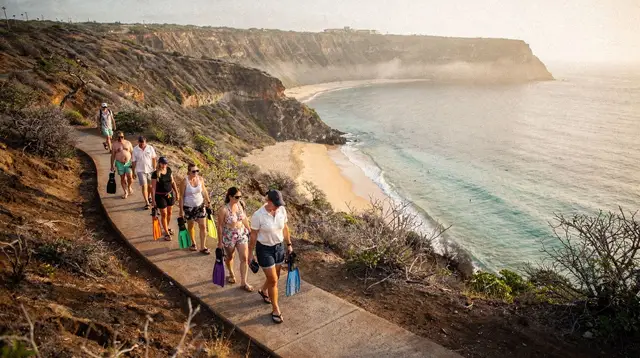
A third option some families overlook: the windward coast. Kailua and the windward coast sit roughly 30 to 40 minutes from Waikiki over the Nuuanu Pali, and trade a resort strip for a quieter beach town with soft sand and generally calmer water than the open-ocean beaches further south. It suits families who want one slower base rather than a hotel zone, though the restaurant and activity density near a hotel in Waikiki is hard to match. A full day exploring Kailua and Lanikai on a one-day windward-coast trip works well from either Waikiki or Ko Olina, without switching hotels mid-week. Kids old enough to paddle can try the calm water off Kailua Beach; see Kayaking Kailua and the Mokulua islands for what that looks like with a family aboard.
Age by age: what actually works
Toddlers and preschoolers (0–4). The reef-protected sections of Waikiki Beach and the Ko Olina lagoons are the two easiest water options on the island for this age. The Honolulu Zoo is stroller-friendly and shaded. Skip anything with a long line, a strict schedule, or a boat ride; a hot afternoon with a cranky toddler is not worth the ticket price.
Young kids (5–9). This is the age where the Waikiki Aquarium’s touch pools and the zoo’s keeper talks start to land, and where beginner surf lessons (soft-top boards, waist-deep water, an instructor holding the board) become realistic; see Surf lessons in Waikiki: what to expect. Snorkeling at a calm, shallow site can work with supervision; save the more current-prone snorkel spots for older kids.
Older kids and preteens (10–13). Pearl Harbor starts to make sense around this age, once kids can sit through a 23-minute film and a history-heavy boat ride to the USS Arizona Memorial without losing interest. The USS Bowfin submarine tour has a minimum height requirement for the interior, so check current limits before you book anything. Full detail, including how to book the free memorial program and what the paid add-ons actually are, lives at Pearl Harbor with kids: what to expect and when to skip it and Pearl Harbor tours: how to plan the whole visit.
Teens. Most of the island opens up: hiking Diamond Head (reservation required, roughly 1.3 km and 170 m of climbing on stairs and through a tunnel), a sunrise hike up Diamond Head paired with breakfast, or a full loop of the island with a guided circle-island tour that stops in Haleiwa.
All ages together. The Polynesian Cultural Center in Laie is built for a full day of hands-on, rotating activities and tends to hold attention across a wide age range better than a single attraction does, though it is a longer drive from Waikiki. A multi-attraction pass that bundles a luau can simplify booking for a family juggling several stops. For evening entertainment with younger kids in tow, a whale-watching cruise paired with a hula show works well in season (roughly November through May); see Best luaus on Oahu, compared by location and price for how luaus compare against each other.
The Pearl Harbor age question, in plain terms
Pearl Harbor is one of the most requested stops on the island, and also one of the most frequently mis-planned for families. The free National Park Service program (the visitor center, two museums, the film, and the Navy boat to the USS Arizona Memorial) has no posted minimum age, but the content is somber and the boat ride and waiting periods run long, which makes it a difficult sit for a toddler or preschooler. Reservations on recreation.gov open eight weeks ahead and carry a roughly 1 USD non-refundable booking fee; there is no way to guarantee entry without one.
The paid attractions nearby, the USS Missouri, the USS Bowfin submarine, and the Pearl Harbor Aviation Museum, are run by separate organizations, not the park service, and the Bowfin’s interior tour has a minimum height requirement worth checking before you commit a whole morning. No bags larger than a small pouch are allowed anywhere on site. Full logistics: Getting from Waikiki to Pearl Harbor and Pearl Harbor: half day or full day?.
Gear, naps, and the practical logistics
Baby and beach gear rental. Honolulu-based rental companies deliver cribs, strollers, car seats, and high chairs to hotels and vacation rentals, typically with a minimum rental period, which is usually cheaper and less stressful than checking oversized bags on the flight. Beach gear, umbrellas, boogie boards, coolers, rents by the day from stands along Kalakaua Avenue in Waikiki.
Naps and the time change. Hawaii runs on HST, two to three hours behind the US West Coast and five to six behind the East Coast, with no daylight saving shift. Young kids commonly wake very early for the first two or three days. Rather than fighting it, build early mornings around a beach or zoo visit and protect an afternoon rest window; by the back half of a week-long trip, most kids settle into local time.
Getting around with kids. TheBus covers the whole island, including routes to the North Shore, and works for families who want to skip a rental car, though it is slower. If your base is Ko Olina or you plan to cover the North Shore or windward coast in a day, a rental car is the more realistic choice; see Rental car and parking on Oahu: what it actually costs.
Budget realities. Prices quoted on this page and across the site are before tax: Oahu adds roughly 4.5 percent general excise tax, and hotel stays add a combined state and county tax plus resort fee on top of that, often pushing lodging costs 18 to 19 percent above the sticker price. See Resort fees and hidden costs at Waikiki hotels for the full breakdown, and Free things to do on Oahu for ways to balance a trip that otherwise adds up fast.
Ocean safety with kids
Read the lifeguard flags posted at the beach that day rather than assuming yesterday’s conditions still apply; Oahu’s swell direction shifts by season and even by day. Waikiki’s reef-protected sections are among the calmer swimming spots on the island for young kids, and Ko Olina’s lagoons are calmer still. Watch for rip currents at any open beach, keep young kids within arm’s reach in the water, and treat any posted warning about jellyfish (Oahu’s south shore sees an uptick roughly 9 to 12 days after a full moon) or Portuguese man o’ war on windward beaches seriously.
The one mistake to avoid: do not plan North Shore beach time for young kids as a swimming stop, especially between roughly November and February. Waimea Bay, Sunset Beach, and Pipeline turn into some of the most powerful, and dangerous, surf breaks in the world during that window, with waves that can reach several meters and shorebreak strong enough to injure a strong adult swimmer, let alone a child. It is a legitimate place to watch surfers from the sand, but not to wade in. If you want dependable calm water for kids, stay on the south shore or at Ko Olina; the season-by-season detail is in The best family-friendly beaches on Oahu and North Shore surf season: when the waves turn on (and off).
Sun protection
Hawaii’s UV exposure is intense year-round, closer to the equator than most of the continental United States, and it catches first-time visitors off guard even on cloudy days. Since January 1, 2021, Hawaii has banned the sale of sunscreens containing oxybenzone or octinoxate statewide, so pack or buy a mineral sunscreen (zinc oxide or titanium dioxide) rather than assuming your usual brand is available locally. Add a rash guard and a wide-brim hat for young kids, since reapplication gets forgotten once everyone is in the water.
Best months to bring kids
Oahu sits in the Northern Hemisphere with a two-season tropical climate rather than four distinct seasons: a drier stretch from roughly May to October and a wetter one from roughly November to April, though even a Honolulu winter day typically reaches around 26°C, warm enough for the beach most mornings. Two seasonal windows matter most for planning with kids. Humpback whales are present roughly December through May, visible from shore in places and from a boat further out; see Humpback whale season on Oahu, month by month for when sightings peak.
The central Pacific hurricane season runs June 1 through November 30, which rarely disrupts a trip outright but is worth knowing about if you are booking far in advance; Hurricane season on Oahu: what it actually means for a trip covers what to watch for. Neither season is a reason to avoid Oahu with kids, but they shift what is on the table: winter adds whale watching and bigger North Shore surf to watch from the sand, while summer trades that for calmer water on the North Shore itself. Winter versus summer on Oahu: which suits your trip lays out the broader trade-offs.
What to pack and confirm before you fly
A few practical items are easy to forget until you are at the airport. Hawaii is part of the United States, so the currency is the US dollar and no currency exchange is needed, but visitors from visa-exempt countries still need a valid ESTA authorization before departure, arranged online in advance rather than at the gate. Pack for Fahrenheit temperatures and mile-based distances on road signs and rental-car dashboards, and note that Hawaii does not observe daylight saving time, so the gap to your home time zone can shift by an hour partway through a longer trip.
A basic first-aid kit, kid-sized reef-safe (mineral) sunscreen bought before you travel or from a local pharmacy, and a copy of each child’s insurance card are worth packing; the nearest emergency number on the islands is 911, the same as the rest of the country. If a rental car is part of the plan, the rental-car guide linked earlier in this page covers car-seat rules and what to expect at pickup, and Oahu on a budget: where the real savings are is worth a read before you lock in a full week of paid activities.
A sample week with kids
For a full day-by-day structure, see Oahu with kids: a five-day itinerary that respects nap time. In broad strokes: ease in with a Waikiki beach morning and the zoo or aquarium on day one to work with the early wake time, add Pearl Harbor or the Polynesian Cultural Center on a day when energy is higher (mid-trip works better than day one), keep one full day open for Ko Olina or a calm south-shore beach, and save any long circle-island driving day for when naps are less critical. Planning your first trip to Oahu: what to know before you go and How many days do you need on Oahu? cover the broader planning questions this guide does not.
Questions families ask before booking Oahu
Family-friendly tours on Oahu on GetYourGuide
Verified deep-linked GetYourGuide tours. Book through these links and we earn a small commission at no cost to you.
GetYourGuide does not provide a product photo for this activity — the image shows the meeting point, photographed by us.