Where Pearl Harbor sits on Oahu
Pearl Harbor is not in Honolulu’s tourist core and it is not close to the beach. It sits on Oahu’s dry, sunny leeward coast, west of downtown Honolulu, on the shores of a natural harbor that has been a working US Navy base since before the Second World War. That matters for planning: this is a site you travel to on purpose, not something you stumble into on a walk from Waikiki.
From Waikiki, the drive covers about 19 km (12 miles) and takes roughly 30 to 40 minutes outside rush hour on the H-1 freeway. During the morning commute, especially on weekdays, that trip can stretch closer to an hour. The exact figure depends on your starting point and the time of day, so treat 30-40 minutes as a baseline rather than a guarantee — a dedicated guide to transport from Waikiki covers the route options and timing in more depth than belongs here.
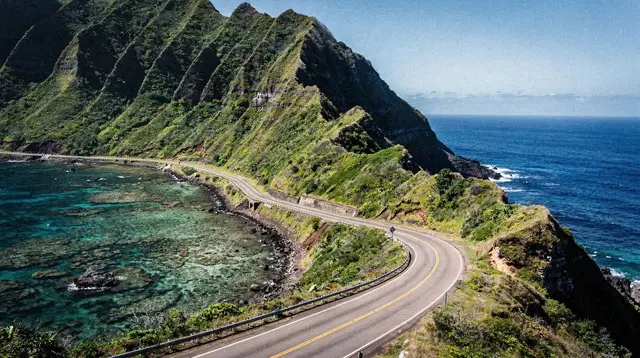
Pearl Harbor falls within leeward Oahu, the island’s dry western side, alongside Ko Olina and the long Waianae coast. It’s a different Oahu from the green, rain-fed windward side or the surf towns of the North Shore: leeward Oahu gets more sun and less rain, which is part of why the base was built here in the first place.
Honolulu, Oahu and where Pearl Harbor fits
It helps to place Pearl Harbor inside the bigger picture before diving into logistics. Honolulu is the capital of the state of Hawaii, and it sits on the island of Oahu — not on the “Big Island,” which is the separate, much larger island of Hawaii, home to the state’s active volcanoes. The city and county of Honolulu actually cover the entire island of Oahu, roughly 1,545 square kilometers, home to about 1 million people, with the urban core of Honolulu itself accounting for around 350,000 of them. Pearl Harbor sits inside that same county, just on the opposite coast from the Waikiki high-rises most visitors picture when they hear “Honolulu.”
Oahu’s highest point, Mount Kaala at 1,227 meters, rises in the Waianae Range that separates Pearl Harbor and the rest of the leeward coast from the windward side of the island. That range is part of why leeward Oahu, including Pearl Harbor, stays drier and sunnier than Kailua or the North Shore on the other side of the mountains — the clouds drop their rain on the windward slopes before they reach the harbor.
There’s no ferry connecting Oahu to Maui, Kauai or the Big Island; travelers island-hopping from a Pearl Harbor base do it by short inter-island flights, typically 25 to 45 minutes in the air. That’s worth knowing if a Pearl Harbor visit is part of a multi-island Hawaii trip rather than an Oahu-only one.
What Pearl Harbor actually is
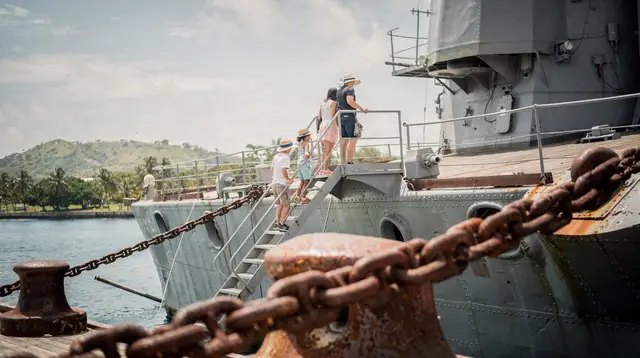
The phrase “Pearl Harbor” gets used loosely, and that looseness causes real confusion for first-time visitors. It is not a single museum with one ticket. It is a cluster of separate memorials and museums, each run by a different organization, spread across and around an active military installation:
- The USS Arizona Memorial, administered by the National Park Service, sits over the sunken battleship where most of its crew remain
- The USS Missouri, the battleship where Japan’s surrender was signed, sits across the harbor on Ford Island
- The USS Bowfin, a WWII submarine, is berthed near the visitor center
- A visitor center and museum complex ties the site together with exhibits and a short film
Each of these has its own access rules, its own hours, and in most cases its own admission. This page is about the site as a whole — where it is, who it’s for, what to expect logistically — not about which memorial costs what or how to book each one. For that level of detail, the Pearl Harbor tours guide walks through how the whole visit fits together, and USS Arizona Memorial tickets covers the reservation process for the most-requested single site. The other two vessels get their own coverage in Battleship Missouri and Bowfin.
Security and what you can bring
Every visitor to Pearl Harbor goes through security screening, and the rules are strict and consistently enforced. Bags, backpacks, purses and similar carried items above a small size are not permitted anywhere on the grounds — this includes camera bags and most diaper bags. There’s no exception for “just this once,” and there’s no casual storage inside the visitor center itself.
This single rule causes more frustration and lost time than any other part of the visit, so it’s worth planning around rather than discovering at the gate. What to actually do with your belongings — where storage exists nearby, what’s worth carrying in your pockets instead — is covered in the Pearl Harbor tours guide. The short version for this page: arrive with as little as possible, and don’t assume you can check a bag on site without a plan already in place.
Because Pearl Harbor remains an active US Navy base, visitor movement is also limited to designated areas, and screening procedures can add time you wouldn’t expect at a typical museum. Building in extra buffer, especially during school holidays and around anniversaries of the December 7, 1941 attack, is worth doing.
Who this visit suits
Pearl Harbor rewards a specific kind of traveler more than a general one. It suits:
- History enthusiasts, especially anyone with an interest in the Pacific theater of the Second World War or naval history broadly
- Families with children old enough to engage, which in practice usually means kids who can sit through a short documentary film and follow a guided or self-paced walk without needing constant entertainment — the family-specific considerations get their own treatment in Pearl Harbor with kids
- First-time Oahu visitors looking for a serious, reflective counterpoint to beach days at Waikiki or snorkeling trips along the southeast shore
- Travelers tracing broader Pacific War history, particularly those planning to combine it with other historical stops on the island
It suits these visitors less well if the goal is a quick, casual stop between other activities. Security lines, the solemnity of the site, and the spread-out layout mean Pearl Harbor asks for a deliberate block of time and the right mindset, not a drive-by.
How much time to set aside
A focused visit to one memorial — most commonly the USS Arizona — can be done in a half day, roughly three to four hours once you include the drive from Waikiki, screening, the film, and the memorial visit itself. Adding a second site, such as the USS Missouri or USS Bowfin, pushes that toward a full day when you factor in the shuttle between sites and additional queuing.
There’s no single right answer for how much time to budget, because it depends on how many of the site’s separate attractions you want to see and how much of a history buff you are. The tradeoffs between a half-day and a full-day visit — what you gain and what you give up either way — are laid out in Pearl Harbor: half day vs full day.
Getting there without a car
You don’t need to rent a car to reach Pearl Harbor. Several practical options exist from Waikiki:
| Option | Notes |
|---|---|
| Guided tour | Transport, narration and logistics handled for you; often bundles more than one memorial |
| Rideshare or taxi | Direct, flexible timing, roughly matches the 30-40 minute drive |
| Shuttle | Scheduled pickup from Waikiki hotels, shared with other visitors |
| Rental car | Full control over timing, but parking and driving add their own overhead |
| TheBus | Cheapest option, considerably slower |
| Skyline | Now serves the Makalapa (Pearl Harbor) station, but doesn’t yet connect directly from Waikiki |
A guided or small-group tour is the simplest way to remove the logistics from the day, particularly the bag-storage problem described above. One option covering the USS Arizona specifically:
a private tour to Pearl Harbor and the USS Arizona Memorial, which handles transport and timing for you.
For a small-group alternative that frames the visit with more historical context along the way, there’s also a small-group WWII history tour of Pearl Harbor.
The full breakdown of every transport method, including timing, cost ranges and which option suits which traveler, lives in Pearl Harbor from Waikiki: transport.
Combining Pearl Harbor with other stops
Some visitors treat Pearl Harbor as a stand-alone half-day trip; others fold it into a longer day that includes other leeward or windward stops, or pair it with an evening luau back in town. If a full day of Pacific history and culture appeals, one option combines two very different experiences:
a combined day covering both Pearl Harbor and the Polynesian Cultural Center.
If you’d rather see the other historic vessels on the same trip, the guide to the battleship Missouri and Bowfin explains how those two additional sites fit around a USS Arizona visit, including how the inter-site shuttle works. For visitors who want to walk the deck where Japan’s surrender was signed as part of a guided visit rather than figuring out the shuttle and ticketing on their own, there’s also a Battleship Missouri Memorial visit with a guide option.
Practical basics for the day
A Pearl Harbor visit runs on the same practical rules as the rest of Hawaii, and a few of them are easy to overlook when the focus is on security lines and ticket windows. Hawaii uses the US dollar, driving is on the right, distances are posted in miles, and temperatures are given in Fahrenheit — all standard for a US destination, but worth confirming if this is a first US trip. Visitors from visa-waiver countries need an approved ESTA before arrival; there’s no visa desk at the memorial to sort this out on the day. The emergency number statewide, including at Pearl Harbor, is 911.
Oahu runs on Hawaii-Aleutian Standard Time (HST, UTC-10) year-round — Hawaii does not observe daylight saving, so the gap to the US mainland changes by an hour depending on the season there. That matters for booking a morning tour slot or an early self-drive arrival: double-check the time shown is local Oahu time, not a mainland time zone carried over from a booking site’s default.
Prices quoted for tours, parking and any on-site concessions are typically shown before tax. Oahu adds a general excise tax of around 4.5% to most purchases; that applies to tours and admissions the same as it does to a meal or a souvenir, so the total at checkout runs a little higher than the headline price. Hotel stays carry a separate, larger combined tax of roughly 18-19% (state transient accommodations tax plus a county surcharge) on top of the room rate, plus any resort fee charged per night — relevant if Pearl Harbor is being booked alongside a Waikiki or Ko Olina hotel stay rather than a day trip from elsewhere.
Weather-wise, Oahu runs a two-season tropical climate rather than four distinct seasons: a drier stretch from roughly May through October and a wetter one from November through April, though even a Honolulu winter day typically sits around 26°C. The Pacific hurricane season runs June 1 through November 30, which occasionally affects outdoor plans island-wide, Pearl Harbor included, though direct hits on Oahu are rare.
Planning notes worth knowing before you go
A few things worth keeping in mind as you build your itinerary:
- Pearl Harbor is on the opposite side of the island from most North Shore and windward-coast attractions. Don’t plan to combine a Pearl Harbor morning with a Kailua or Lanikai afternoon; the drive between the two sides of Oahu takes real time.
- This is not a beach stop. There’s no swimming, no snorkeling, nothing resembling the water activities found at Ko Olina a short distance further down the leeward coast.
- Mornings tend to run smoother than afternoons. Security lines and crowd size both build through the day, particularly on weekends and around school holiday periods.
- This page intentionally leaves out ticket prices, individual memorial hours and booking windows. Those specifics change and are covered properly in the linked guides above — starting a Pearl Harbor visit means starting with the Pearl Harbor tours guide, which ties all of the above together into one plan.
Pearl Harbor visit: frequently asked questions
How far is Pearl Harbor from Waikiki?
About 19 km (12 miles). Figure 30-40 minutes by car off-peak, and closer to an hour during morning rush hour on the H-1. Rideshare, shuttle and guided-tour options all cover the same route.
Is Pearl Harbor free to visit?
The National Park Service memorial grounds are free to enter. Some individual sites within the wider complex charge separate admission and require their own bookings, which is covered in the linked guides rather than here.
Can I bring a bag or backpack?
No. Security screening is strict and bags, purses and backpacks above a small size are not allowed on site. This catches out more visitors than any other single rule, so plan for it before you arrive.
Is Pearl Harbor still an active military base?
Yes. Pearl Harbor is a working US Navy base, and the memorials sit inside or alongside an active installation. Visitor access is limited to designated areas and is subject to security procedures.
Is Pearl Harbor worth it with kids?
It depends on age and attention span. The site rewards children old enough to sit through a short film and follow a guided or self-paced visit; a dedicated guide to the family angle is linked below.
How much time should I set aside?
A half day (3-4 hours) covers a focused visit to one or two memorials. A full day allows time for more than one site plus transit, which is broken down in a dedicated comparison guide.
Do I need a car to get there?
No. Guided tours, shuttles and rideshare all run from Waikiki, and Skyline’s Makalapa station now serves the area, though it does not yet connect directly from Waikiki. Driving yourself is an option but not a requirement.