North Shore surf season: when the waves turn on (and off)
When is the North Shore surf season on Oahu?
Winter, roughly November through February or March, brings the big north Pacific swells that make Pipeline, Waimea Bay, and Sunset Beach famous, with waves regularly exceeding double overhead. From May through September the same coast goes nearly flat, safe for swimming but with nothing for surfing.
Same coastline, two different oceans
Drive the Kamehameha Highway along Oahu’s North Shore in August and you’ll find flat, glassy water lapping at wide sand beaches, kids wading in at Waimea Bay, and a handful of longboarders drifting on knee-high rollers. Drive the same road in January and that picture is gone. The water stands up in double- and triple-overhead walls, the shorebreak alone can knock a grown adult off their feet, and lifeguard towers post red flags with no ambiguity: stay out. It’s the same 12 km (7 miles) of coast, the same beach names, and almost two different oceans depending on the month.
This is the single fact worth understanding before you plan a North Shore trip: the surf season here isn’t a marketing phrase, it’s a physical, seasonal switch driven by storms thousands of kilometers away in the north Pacific. Winter swells born off Japan and the Aleutians travel across open ocean and hit Oahu’s north-facing shore directly, with nothing to block them. In summer, that storm track shifts north and the swell window closes almost entirely. This guide covers what that means month by month, what it’s like to watch rather than surf, and why the beginner surf lesson you might be picturing does not happen on this coast in winter.
The winter season: November through February or March
From roughly November to February, sometimes stretching into early March, the North Shore becomes one of the most consequential stretches of surfable coastline in the world. The swells that arrive here are generated by winter storms in the north Pacific and can produce faces well over 3 to 6 m (10 to 20 feet), with the biggest days at spots like Waimea Bay exceeding that.
Three breaks carry the reputation:
- Banzai Pipeline — a shallow reef break that produces one of the most photographed (and most dangerous) waves on earth. The wave breaks close to shore over sharp coral in relatively shallow water, which is exactly what makes it both spectacular to watch and unforgiving to ride.
- Waimea Bay — a deep-water bay that stays closed out and unrideable most of the year, then comes alive on the biggest winter swells, when it hosts genuine big-wave surfing.
- Sunset Beach — a long, powerful, shifting wave known for punishing wipeouts and strong currents, and one of the three stops on the winter contest circuit.
None of these are beginner or intermediate waves at any point in winter. They are ridden by surfers with years of specific big-wave experience, safety training, and often support crews. For everyone else, winter on this coast is a watching season, not a swimming or surfing one.
Wave size by rough phase
| Period | What’s typical | Who it’s for |
|---|---|---|
| November | Building swells, increasingly large and frequent | Experienced surfers, spectators |
| December–January | Peak size and consistency, biggest days of the year | Expert/professional surfers only; best spectator window |
| February | Still large but more variable | Experienced surfers, spectators |
| Early March | Tapering, transition weeks | Mixed, check daily conditions |
| May–September | Flat to small, calm | Swimmers, beginners, snorkelers |
Treat these as tendencies, not a calendar you can set a watch by — the north Pacific doesn’t run on a fixed schedule, and a “shoulder month” can still throw a large swell or a completely flat week.
Winter competitions: what they mean for a visit
The North Shore’s winter swell window is also its competition window. The Vans Triple Crown of Surfing runs across Haleiwa, Sunset Beach, and Pipeline during the winter months, and The Eddie — the invitational at Waimea Bay named for lifeguard Eddie Aikau — only runs when the bay produces the specific giant swell it requires, which can mean it doesn’t happen at all in a given year.
For a visitor, contest days change the coast in practical ways:
- Parking along Kamehameha Highway near Pipeline and Sunset Beach fills early, often before sunrise on a forecast big day.
- Beach access and viewing areas near the contest zone get crowded and sometimes roped off for competitors and event staff.
- Traffic on the two-lane highway slows through Haleiwa and along the contest stretch.
- Regular beach access away from the contest zone is largely unaffected, so a quieter beach day is still possible elsewhere on the North Shore the same day.
If you want to watch a contest or a big swell, plan to arrive early and expect to walk from a parking spot some distance away. If you’d rather avoid the crowds entirely, check the day’s forecast and contest schedule and consider a different part of the coast, or a different day. The same logic that applies to booking tours in advance applies to a contest-day visit: see our what sells out and when to book ahead guide for the broader pattern on Oahu.
Winter surf season overlaps whale season
The same November-to-March window that lights up the North Shore’s waves also overlaps with Oahu’s humpback whale season, and the two are easy to combine on a winter visit. Humpbacks migrate down from Alaska to breed and calve in Hawaiian waters roughly from November through April or May, with peak sightings typically in January and February — almost exactly the same stretch that produces the biggest surf. See our humpback whale season month-by-month guide for the details, and our whale watching from Waikiki guide if you’d rather combine a whale-watching trip with a South Shore base instead of a North Shore day.
What there is to do here beyond watching waves
Even outside the narrow window when Pipeline is firing, the North Shore has enough to fill a half or full day. Haleiwa is the small town most people use as a base for a visit — plate lunch counters, surf shops, and the historic Haleiwa Bridge. Just past town, the shrimp trucks of Kahuku are a genuine North Shore institution, not a tourist add-on; see our shrimp trucks of the North Shore guide for which ones are worth the stop. Laniakea Beach draws crowds for its resident green sea turtles (honu), which haul out to rest on the sand; keep a minimum distance of about 3 m (10 feet) and never touch them. Inland, the Dole Plantation in Wahiawa and the Polynesian Cultural Center in Laie round out a full loop — our Polynesian Cultural Center guide covers what to expect from a visit there.
If you’d rather have someone else plan the stops and order, our North Shore day tour guide compares the operator-run options, and the one-day North Shore itinerary lays out a full self-paced route if you’re driving yourself.
For a half-day out from Waikiki that covers the coastal highlights without requiring you to drive and navigate yourself, an operator-run half-day North Shore scenic tour handles the road time and knows where parking is realistic on a given day. If you’d rather cover ground on two wheels at your own pace once you’re in Haleiwa, a guided electric bike tour of Haleiwa and the North Shore is a good way to see the town and coastline without fighting for parking at every stop.
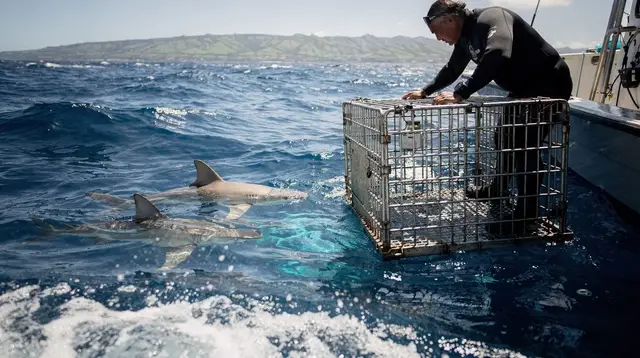
The water off this coast isn’t only about waves, either. Several operators run boats a few miles offshore, well outside the surf zone, for cageless shark diving — a very different way to experience these waters, and one that works year-round since it isn’t tied to the wave-season calendar. If that’s of interest alongside your surf-watching day, a North Shore cageless shark diving tour is worth comparing against the coastal sightseeing options — see our full North Shore shark dive guide for what the trip actually involves.
Summer: the flat season, and what it’s good for
From roughly May through September, the North Shore swell all but disappears. The same beaches that host giant, closed-out surf in January turn into some of Oahu’s calmest, most swimmable water. Waimea Bay in summer is a popular spot for families and cliff jumpers off the rock at the point; Sunset Beach becomes a wide, gentle stretch of sand good for a walk or a swim.
Surfers looking for waves in summer generally aren’t looking at the North Shore at all — south and west-facing shores on Oahu pick up smaller summer south swells instead. If your visit falls in summer and you were hoping to see the famous North Shore surf, set expectations accordingly: you’ll see a beautiful, quiet coastline, not the wave-riding spectacle from the surf videos.
Calm summer water also makes this stretch of coast one of the better options for a family beach day that isn’t Waikiki — see our family-friendly beaches on Oahu guide for how Waimea Bay and the North Shore’s summer beaches compare to the South Shore’s options. And if you’re still deciding which season fits your trip better overall, our winter vs. summer on Oahu guide weighs the surf-season trade-offs against weather, crowds, and price.
A summer evening on this coast has its own appeal, particularly on the water. A sunset sail out of Haleiwa — either a sunset cruise departing from Haleiwa or a North Shore sunset catamaran cruise — takes advantage of exactly the calm conditions that make winter sailing here impractical.
Where the beginner surf lesson actually is
This is worth stating plainly because it’s the most common misunderstanding about this coast: the North Shore is not where beginners learn to surf, especially not in winter. Even in summer’s calmer conditions, the North Shore isn’t the go-to teaching coast — Waikiki is, and for good reason. Waikiki’s reef breaks produce small, forgiving, consistent waves close to shore, with lifeguards, rental shops, and instructors set up specifically for first-timers, year-round.
If you’re looking to take a lesson, start with our surf lessons in Waikiki guide, or the broader guide to learning to surf on Oahu if you’re still deciding where and how to start. If you’re weighing a lesson against just renting a board and going out on your own, see surf lesson vs. board rental for that comparison. None of those paths lead to the North Shore in winter, and any operator offering a “North Shore beginner lesson” during big-swell months should be treated with real skepticism.
Planning a North Shore visit around the surf season
Getting there. The drive from Waikiki is about 50 km (30 miles), typically 45 minutes with no traffic and 1 to 1.5 hours in practice, especially returning in late afternoon. Most visitors drive themselves via the H-2 and Kamehameha Highway, or join a guided tour that handles the driving and parking. See our Oahu getting-around guide for the full range of options, including TheBus routes that reach the North Shore, and our rental car and parking on Oahu guide if you’re driving yourself.
Deciding when to come at all. If the surf season is one factor among several — weather, whale season, crowd levels, price — our best time to visit Oahu guide weighs them together, and first-time Oahu planning is a good starting point if this is your first trip and the North Shore is just one stop on a longer itinerary.
When to go for the spectacle. December and January give the best odds of seeing genuinely large surf, with the winter contest window adding organized events to watch. Check a surf forecast a few days out rather than relying on the calendar alone — swell arrives in pulses, not as a steady winter-long wall of waves.
When to go for the beach. May through September, when the water is calm enough for swimming and snorkeling and the crowds thin out compared to a big winter swell day.
Parking reality. On any day with notable surf, expect the small pullouts along Kamehameha Highway near Pipeline, Ehukai Beach Park, and Sunset Beach to fill early. Haleiwa town has more consistent parking but fills on weekends. A tour that includes transport removes this variable entirely, which is one of the more underrated reasons to book one for a first visit.
What to bring. Reef-safe sunscreen (mineral formulas are required statewide; see our sunscreen and reef-safe guide — actually, check current products before you fly), a hat, water, and cash for smaller food trucks and parking. There’s no shade at most viewing points along the highway.
Watching big surf safely
If you’re on the beach to watch rather than to swim or surf, a few rules keep a visit safe and considerate of the water safety operation underway:
- Stay behind posted flags and lifeguard tape, even if the water looks calm from where you’re standing — waves arrive in sets, and a “flat” five minutes can be followed by a large set with no warning.
- Never turn your back on the ocean at the shorebreak, even just for a photo. Winter shorebreak alone sends people to the hospital every season.
- Give surfers, photographers, and water safety crews room on the sand near the high-tide line.
- If you brought children, keep them well back from the wet sand at spots like Pipeline and Waimea Bay on any day with visible surf.
North Shore surf season FAQ
When is the North Shore surf season on Oahu?
Winter, roughly November through February and sometimes into early March, when north Pacific storm swells hit the coast directly. December and January typically bring the largest and most consistent waves.
Can beginners surf the North Shore in winter?
No. Winter waves at Pipeline, Waimea Bay, and Sunset Beach are generated by experienced big-wave and professional surfers, and the shorebreak is dangerous even for strong swimmers who aren’t surfing at all. No reputable operator teaches beginners here during this window.
Is the North Shore safe for swimming in the summer?
Generally yes. From roughly May through September the winter swell disappears and beaches like Waimea Bay turn calm and swimmable. Conditions still vary daily, so check posted flags and lifeguard guidance before getting in.
What is the biggest wave season at Pipeline and Waimea Bay?
December and January are typically the most consistent for large, well-formed swells. November and February can still produce big days but with more variability day to day.
Do the winter surf competitions affect visiting the North Shore?
Yes. The Vans Triple Crown of Surfing runs across Haleiwa, Sunset Beach, and Pipeline in winter, and Waimea Bay hosts The Eddie when conditions allow. Contest days bring crowds and fill roadside parking early; a different stretch of coast is a better bet if you just want a quiet beach day.
How far is the North Shore from Waikiki?
About 50 km (30 miles) by road, roughly 45 minutes with no traffic and 1 to 1.5 hours in typical conditions, especially in late afternoon traffic.
Where can beginners actually learn to surf near Honolulu?
Waikiki, not the North Shore. Waikiki’s reef breaks are small, gentle, and consistent year-round, and it’s where the overwhelming majority of Oahu’s beginner lesson operators are based.
Seasonal tours and activities on GetYourGuide
Verified deep-linked GetYourGuide tours. Book through these links and we earn a small commission at no cost to you.
GetYourGuide does not provide a product photo for this activity — the image shows the meeting point, photographed by us.