North Shore shark dive: what the boat trip out of Haleiwa is really like
What is the North Shore shark dive and do I need diving experience?
It's a boat trip from Haleiwa harbor to about 3 miles offshore, where you view reef sharks (and sometimes tiger sharks) from a floating cage or in open water at the surface. No scuba certification is required since you don't go underwater on tanks; you do need to be a confident swimmer.
What this trip actually is
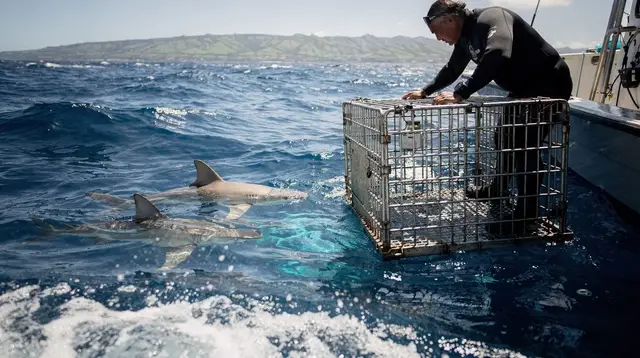
The North Shore shark dive is a boat excursion out of Haleiwa harbor, on Oahu’s North Shore, that takes you roughly 3 miles offshore into open water where reef sharks live year-round and, at certain times of year, tiger sharks pass through. Depending on the operator, you view them from inside a floating cage tethered to the boat, or you free-dive in open water alongside the boat crew with a mask, snorkel and fin. Either way, you stay at the surface. This is not scuba diving, and it is not the shallow reef snorkeling you’d do at Hanauma Bay or along the beaches of the south shore. It’s a boat trip into open ocean, over water that can run 300 to 600 m (1,000 to 2,000 feet) deep, to see animals that live there.
That distinction matters because operators market this trip alongside gentler snorkel tours, and it is not the same experience. There’s no coral reef to look at, no schooling reef fish, and the water can have some chop even on a calm day. What you’re there for is the sharks, and the open-ocean setting they live in.
The route from Waikiki to Haleiwa
Haleiwa sits on the northwest corner of Oahu, and the drive up from Waikiki covers close to 50 km (30 miles), mostly via the H-1 and H-2 highways before you pick up Kamehameha Highway into town. Budget 45 minutes with no traffic, but realistically closer to an hour to an hour and 15 minutes, since the H-1 through central Honolulu backs up during commute hours. Boats typically depart early, often between 6 and 8 a.m., which means an early alarm from Waikiki: figure on leaving your hotel by 5 to 5:30 a.m. to make a 7 a.m. check-in with margin for traffic and parking.
Some operators build hotel pickup into the price, which removes the logistics headache and the need for a rental car that day. If pickup isn’t included, you’ll need a rental car or a rideshare; TheBus reaches Haleiwa on route 52, but the ride from Waikiki takes well over an hour with a transfer and doesn’t suit an early-morning check-in.
Duration, format, and what to expect on the water
| Stage | Approximate time |
|---|---|
| Check-in at Haleiwa harbor | 20-30 minutes |
| Boat ride to the dive site (~3 miles out) | 20-30 minutes |
| Time in the water | 20-40 minutes |
| Return trip and disembark | 20-30 minutes |
| Total, door to door at the harbor | 2 to 3 hours |
Add drive time from Waikiki on top of that if the trip doesn’t include pickup.
Once the boat reaches the site, the crew typically chums the water lightly to draw sharks toward the boat, then either lowers a floating cage over the side (cage format) or has swimmers enter the water directly under crew supervision (cageless, open-water format). Neither requires kicking down or holding your breath for extended periods; you’re floating at the surface, looking down through a mask. Crew stay in the water or on the boat the entire time and set clear rules about how close you can get and what not to do (no touching, no chasing).
Species seen most often are Galapagos sharks and sandbar sharks, both reef sharks in the 1.5 to 3 m (5 to 10 foot) range that are not considered a serious threat to swimmers under normal conditions. Tiger sharks pass through this same stretch of water, more so in the cooler months, and operators will tell you honestly that a tiger shark sighting is a highlight, not a guarantee.
No certification required, but you do need to swim
A recreational scuba certification is not required for this trip, cage or cageless. You’re snorkeling at the surface, not descending on tanks, so there’s no dive card to show and no logged dives to prove. What operators do require is that you’re a reasonably confident swimmer, comfortable in open water with some current and boat wake, and able to use a mask, snorkel and fin without panicking. If you’ve only ever snorkeled in a calm, shallow bay, this is a step up in conditions, even though the physical skill required is modest.
Life jackets and flotation aids are typically available for anyone not comfortable free-floating, and cage trips in particular suit less confident swimmers since the cage itself provides something to hold onto.
Health considerations operators flag
Most operators publish a short list of conditions that disqualify or discourage participation, and the two that come up most consistently are pregnancy and heart conditions. Motion on an open-boat ride to open water, plus the exertion and adrenaline of the in-water portion, is enough that operators would rather turn away a booking than take on that liability. If you have a heart condition, are pregnant, or have a health concern that affects swimming or boat travel, contact the operator directly before booking rather than assuming it will be fine on the day.
Seasickness is also worth planning for: the ride out crosses open water, and Haleiwa’s harbor entrance can have a noticeable swell even when the trip runs. If you’re prone to motion sickness, take precautions before you board, not after.
Price range
Expect to pay roughly 100 to 150 USD per adult for either the cage or the cageless open-water format, before Hawaii’s general excise tax adds a few percent on top. Prices vary by operator, boat size, group size, and whether hotel pickup is included. A private or small-group charter runs well above that range. Always check what’s included: some trips add underwater photos or video as a paid extra rather than bundling it into the ticket.
Why winter cancellations happen, and why that’s frustrating timing
The North Shore earns its reputation in winter (roughly November through February) for the same reason surfers flock there: a Pacific swell that can push waves several meters high onto beaches like Waimea Bay and the Banzai Pipeline. That same swell reaches the harbor entrance at Haleiwa and the open water where shark trips operate. When conditions get rough, operators cancel rather than risk a small boat crossing a breaking harbor mouth or bouncing through open-ocean swell with passengers aboard.
The frustrating part is that winter is also considered a stronger season for tiger shark sightings in these waters, so the same weather that improves your odds of seeing one is the weather most likely to cancel your trip. If you’re booking a winter date specifically hoping for a tiger shark, build in flexibility: a multi-day window in your itinerary, rather than a single fixed morning, improves your chances of the trip actually running. Operators will typically offer a refund or reschedule for weather cancellations, but confirm the policy before you book.
Summer months (roughly May to September) bring calmer water on this coast and a more reliable trip schedule, though sightings skew more toward reef sharks than tiger sharks in that stretch.
Booking
Oahu’s cageless shark trip out of the North Shore puts you in open water directly with the crew rather than inside a cage, for travelers comfortable with that format. If you’d rather have the security of a floating enclosure, the shark cage diving experience departing from Haleiwa covers the same waters with a cage included. A third option, the open water shark snorkel and free dive trip from Haleiwa, is worth comparing on boat size and group size before you decide.
If sharks aren’t the priority and you’d rather see the North Shore’s coastline, beaches and small towns without getting in the water, the half-day scenic tour of Oahu’s North Shore covers Haleiwa, Waimea Bay and the area’s lookout points from land.
How this compares to other Oahu water activities
If what you actually want is calm, shallow reef snorkeling with tropical fish, this trip is the wrong choice; see our snorkeling on Oahu guide or the roundup of best snorkeling beaches on Oahu instead, or the reservation system for Hanauma Bay if that’s the spot you have in mind. For an easier, protected-water outing built around wildlife rather than open-ocean sharks, the turtle snorkel tours at Turtle Canyon are a gentler alternative close to Waikiki.
If you’re weighing whether a guided boat snorkel tour is worth it over just walking into the water at a public beach, our breakdown of snorkel tours versus beach snorkeling covers that trade-off directly. And if you’re already certified or want to get certified for real scuba diving on Oahu, rather than a surface encounter, start with scuba diving on Oahu for beginners.
Planning the rest of your North Shore day
Most shark dive trips return to the harbor by late morning, which leaves the rest of the day free. Haleiwa town itself is worth a slow walk for lunch, and the shrimp trucks of Kahuku are a short drive up the coast if you want the classic North Shore food stop. For a broader look at the region beyond this one activity, see the North Shore day tour guide or the one-day North Shore itinerary for a full day plan built around Haleiwa, Waimea Bay and Sunset Beach.
Travelers building a longer stay on this side of the island sometimes pair the shark trip with surf lessons on the North Shore or an electric bike tour around Haleiwa the same day, since both depart from the same small harbor town. If you’re still deciding how many days to spend on this side of Oahu versus Waikiki or the windward coast, our North Shore destination page has the wider picture, and how many days on Oahu helps you fit it into a full itinerary.
FAQ: North Shore shark dive out of Haleiwa
Do I need a scuba certification for the North Shore shark dive?
No. This is surface snorkeling from inside a floating cage, or free-diving with a mask and fin in open water, not scuba diving. You breathe at the surface the whole time, so no certification card or prior diving experience is required.
How long does the shark dive trip take?
Plan on 2 to 3 hours total, including check-in at the harbor, the boat ride out to around 3 miles offshore, time in the water, and the return trip. Actual in-water time is usually 20 to 40 minutes.
How much does it cost?
Most operators price these trips in the range of roughly 100 to 150 USD per person, before the general excise tax that applies to activities on Oahu. Cage viewing and open-water free-dive formats are priced similarly, though exact rates vary by operator and season.
Are sharks guaranteed on every trip?
No. These are wild animals in open ocean, and no operator can promise a sighting. Most trips do see sharks, mainly Galapagos and sandbar reef sharks, but a guide who tells you a sighting is guaranteed is not being straight with you.
Why do operators cancel shark dive trips in winter?
Winter (roughly November to February) brings the North Shore’s big north swell, which can make the harbor entrance and the open water too rough for a small boat to operate safely. Ironically, winter is also when tiger sharks are more commonly seen in this area, so cancellations can cost you the best sighting odds of the year.
Can I get from Waikiki to Haleiwa without a rental car?
Some operators include hotel pickup in Waikiki as part of the package; check before booking. Without a shuttle, you’re looking at a rental car or a rideshare, since TheBus connections to Haleiwa from Waikiki are slow and involve transfers.
Is the shark dive suitable for kids or pregnant travelers?
Age minimums vary by operator, but most set a minimum around 8 to 10 years old and require that all swimmers be comfortable in open water. Operators commonly advise against the trip for anyone who is pregnant or has a heart condition; check the specific operator’s health and swimming requirements before booking.
Snorkelling and diving tours on GetYourGuide
Verified deep-linked GetYourGuide tours. Book through these links and we earn a small commission at no cost to you.
GetYourGuide does not provide a product photo for this activity — the image shows the meeting point, photographed by us.