Scuba diving on Oahu for beginners with no certification
Can you scuba dive on Oahu without being certified?
Yes. Several operators run discover scuba diving sessions for beginners that start with a short briefing and shallow-water skills practice, then move to a supervised ocean dive with an instructor guiding you the entire time. No prior certification or experience is required, but a minimum age and a health screening apply.
Trying scuba diving on Oahu without a certification card
Plenty of visitors want to breathe underwater at least once without spending days on a certification course. On Oahu, that option exists as a “discover scuba diving” or “introductory scuba” session: a short, instructor-led program built specifically for people who have never dived before. It is not a shortcut into open-water diving on your own, and it is not the same product as the certified dives listed further down this page. This guide explains how the beginner format actually works, what a typical day looks like, what operators expect from you physically, and where it fits against Oahu’s other water activities.
If you are choosing between this and a mask-and-snorkel outing instead, start with our overview at Snorkeling on Oahu: where to go and when, which covers snorkeling on Oahu generally. For the specific case of Hanauma Bay’s reservation system, see Hanauma Bay reservations: how to book your entry. Boat-based snorkel trips to a reef area known as Turtle Canyon are covered separately at Turtle Canyon snorkel tours from Waikiki, and if you are trying to decide between a guided outing and swimming from the beach on your own, that comparison lives at Snorkel tours vs. beach snorkeling on Oahu. Shark encounters on the North Shore are their own separate activity, described at North Shore shark dive: what the boat trip out of Haleiwa is really like.
What “discover scuba diving” actually means
The name varies by operator — discover scuba, introductory dive, beginner scuba experience — but the structure is consistent across the industry. It is a supervised, entry-level program designed to let a total beginner breathe underwater using scuba gear, under direct one-on-one or small-group supervision from a certified instructor, without requiring any prior training.
The key distinction to hold onto: this is not the same activity as diving with a certification. A certified diver has completed a multi-day training course covering dive theory, safety procedures, and supervised open-water dives, and can then dive with a buddy at greater depths with more independence. A beginner in a discover scuba session never dives alone or without direct instructor supervision, and the dive stays within conservative depth limits the operator sets for that purpose. Presenting the two as interchangeable is one of the most common ways visitors misunderstand what they are booking — don’t expect the freedom of a certified dive on a beginner program, and don’t expect a beginner program to leave you qualified to dive independently afterward.
How a beginner dive day is structured
Every operator runs the details slightly differently, but the shape of the experience is broadly the same:
- Check-in and paperwork. Expect a health questionnaire and a liability waiver before anything else happens.
- Briefing. An instructor explains the gear, basic underwater signals, and what to expect, entirely on land or on the boat before you get wet.
- Shallow-water or pool skills session. This is the part beginners often don’t anticipate: before heading to open water, you practice the handful of essential skills — clearing your mask, breathing through the regulator, basic buoyancy — in a pool or a calm, shallow, protected area. This step exists precisely because you have no prior training, and operators do not skip it.
- Transfer to the dive site. Depending on the operator, this might be a short walk from shore or a boat ride to a coastal site.
- The supervised ocean dive. An instructor stays with you the entire time, typically holding onto or staying within arm’s reach of a beginner diver, at a shallow, conservative depth.
- Surface, debrief, and return. Gear comes off, and you head back to shore or port.
Counting all of this — not just the underwater portion — is important for planning your day. The actual time spent breathing underwater on a discover dive is often a relatively small slice of the total outing once you include the paperwork, briefing, skills practice, and transport. Treat a beginner scuba session as a half-day commitment rather than a quick hour-long add-on to a beach afternoon.
Duration, at a glance
| Segment | What happens |
|---|---|
| Check-in and briefing | Paperwork, gear fitting, safety talk |
| Skills practice | Pool or shallow, protected water |
| Transfer | Shore walk or boat ride to the site, if applicable |
| Ocean dive | Supervised, shallow, instructor-led |
| Wrap-up | Gear return, debrief |
| Total experience | Roughly a half-day, varies by operator |
Because operators structure their programs differently, confirm exact timing, meeting points, and what’s included directly with the operator you book through rather than assuming a fixed schedule.
Minimum age and who this is for
Beginner scuba programs commonly set a minimum age, often in the range of 10 to 12 years old, though this is not universal — some operators set it higher or lower, and family-oriented operators sometimes run modified versions for younger children in pool settings only. If you’re planning this for kids or teens, confirm the exact age policy with the specific operator before booking rather than assuming.
Beyond age, operators generally expect participants to be reasonably comfortable in water — this is not a lap-swimming test, but you should not be booking a beginner dive if you are not at ease putting your face in the water at all. Ask the operator directly if you’re unsure whether the activity is a good fit.
Health conditions to disclose before booking
Scuba diving, even at the shallow, supervised level of a discover dive, involves pressure changes that make certain health conditions relevant. Operators ask about these on a standard health questionnaire, and it is worth thinking through the list before you book rather than being surprised at check-in:
- Respiratory conditions, including asthma, especially if it’s exercise- or cold-induced
- Heart conditions or a history of heart problems
- Ear, sinus, or nasal problems, including a current cold, congestion, or recent ear surgery
- Recent surgery of any kind, or a recent significant illness
- Pregnancy
- Diabetes, depending on how it’s managed
- Any medication that affects alertness, coordination, or blood pressure
- A history of seizures or fainting
Some of these conditions do not automatically rule you out, but they can require a signed medical clearance from a physician before an operator will let you dive. Getting that clearance can take a few days to arrange, so if any of this applies to you, contact the operator well before your trip rather than the morning of.
Where beginners dive on Oahu
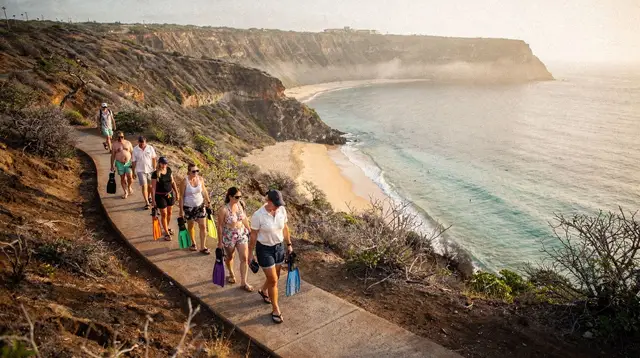
Several operators run discover scuba sessions from coastal locations around the island, including options with pickup from or departure near the Waikiki area, which is convenient if that’s where you’re staying. The exact dive site on any given day depends on the operator’s usual location, current ocean conditions, and the season — operators choose sites specifically for their shallow depth, protection from swell, and visibility, which is exactly the kind of setting a first-time diver needs. Don’t expect a fixed, named site guaranteed in advance; ask the operator what to expect on the day you book.
We’re not listing a specific price here, since rates vary by operator, season, and what’s included (gear, photos, transport), and any number printed today is likely to be out of date by the time you read this. Check current pricing directly with the operator when you book, and remember that Hawaii’s roughly 4.5% general excise tax applies on top of the advertised rate.
a beginner-friendly discover scuba session from Waikiki, no certification required is the option that matches everything described above: briefing, shallow-water practice, then a supervised ocean dive.
If you’re already certified
Everything above is specific to divers with no certification. If you already hold a diving certification, Oahu’s certified-diver options open up considerably more terrain — greater depths, wrecks, and less hand-holding from an instructor. Two options worth knowing about:
a wreck and reef dive for certified divers takes you to sites beyond what a beginner program covers, and a shallow reef dive for certified divers is a gentler certified option if you’re diving for the first time in a while and want to ease back in.
If scuba isn’t the right fit
Not everyone wants to put on a tank, and that’s a completely reasonable call — snorkeling covers much of the same reef and marine life at a fraction of the commitment. If you’d rather stay on the surface and look down instead, our Snorkeling on Oahu: where to go and when is the place to start, and Best snorkeling beaches on Oahu you can reach without a boat lists specific spots. For a no-gear-at-all way to see the underwater world, a submarine tour off Waikiki takes you below the surface in a real submarine, seated and dry, which works well for people who aren’t comfortable in open water or are diving with non-swimmers in the group.
Planning the rest of your day around a dive
Because a beginner scuba session realistically takes up half a day, most visitors pair it with a low-key second half rather than stacking another major activity on top. If you’re building out a longer itinerary that includes water time, our destination overviews for Waikiki and Oahu are useful starting points, and the Snorkeling and diving category page rounds up the full range of underwater activities on the island, from snorkeling to submarine tours to certified diving.
For trip-length planning more broadly, see How many days do you need on Oahu? and Planning your first trip to Oahu: what to know before you go. If you’re traveling with kids and weighing whether a discover dive is realistic for your family, Oahu with kids: where to stay, what to do, what to skip and The best family-friendly beaches on Oahu cover age-appropriate alternatives alongside this option. And if budget is a factor in deciding between scuba, snorkeling, and other water activities, Oahu on a budget: a realistic spending plan lays out the tradeoffs.
Scuba diving for beginners on Oahu: frequently asked questions
Do I need any diving experience to try discover scuba diving on Oahu?
No. Discover scuba programs are built for complete beginners. An instructor teaches the basic skills you need in a pool or shallow, protected water before the ocean portion, and stays with you underwater throughout the dive.
How is a discover scuba dive different from certified diving?
A discover scuba dive is supervised by an instructor from start to finish and stays within conservative depth limits set by the operator. A certified diver has completed a training course and can dive with a buddy at greater depths and with more independence. The two are not interchangeable products.
How long does the whole experience take?
Plan on roughly half a day once you add check-in, the briefing, the pool or shallow-water skills session, gear fitting, the boat or shore transfer if there is one, and the dive itself. The underwater time is a smaller portion of that total.
Is there a minimum age for beginner scuba diving on Oahu?
Most operators set a minimum age, commonly around 10 to 12 years old, though this varies by operator and program. Confirm the age policy directly with the operator before booking if you are traveling with children.
What health conditions should I mention before booking?
Tell the operator in advance about asthma or other lung conditions, heart conditions, ear or sinus problems, recent surgery, pregnancy, and any medication that affects consciousness or coordination. Some conditions require a doctor’s medical clearance before you can dive, and this can take time to arrange, so ask early.
Do I need to know how to swim?
Operators generally expect basic comfort in the water, though you are not swimming laps. Ask the specific operator about their swim requirement when you book.
Where on Oahu can beginners try scuba diving?
Several operators run beginner scuba sessions from coastal areas on the island, including options departing from the Waikiki area. Exact dive sites depend on the operator, the day’s ocean conditions, and the season.
Can I get certified during this same trip?
A discover scuba dive is not a certification course and does not make you a certified diver on its own. If you want a certification, look for a dedicated open water certification course, which takes longer and includes classroom and pool sessions in addition to open-water dives.
Snorkelling and diving tours on GetYourGuide
Verified deep-linked GetYourGuide tours. Book through these links and we earn a small commission at no cost to you.
GetYourGuide does not provide a product photo for this activity — the image shows the meeting point, photographed by us.