September is the secret month on Oahu
There is a particular week, most years, when Oahu seems to let its shoulders drop. The mainland’s summer break has ended, the kids are back in school somewhere else, and the island that spent July and August absorbing every family road trip and graduation gift finally has some room to breathe. That week usually lands in September, and it is my favorite stretch of the whole year here.
An island between two seasons
Oahu doesn’t really have four seasons. It has dry, from May to October, and wet, from November to April. September sits deep in the dry half, so you still get the string of warm, stable days that define a Honolulu summer — sun by mid-morning, an afternoon breeze off the ocean, evenings that don’t need a jacket. What’s different is everything around the weather.
The North Shore swell that turns Sunset Beach and the Banzai Pipeline into a spectator sport hasn’t shown up yet. That’s a winter phenomenon, and I’ve written elsewhere about what the North Shore looks like once it arrives — walls of whitewater, competition flags, lifeguards waving people out of the water. None of that is happening in September. Waimea Bay is still a swimming hole. Haleiwa’s parking lot has actual spaces in it. If you want a sense of how different this same coastline behaves depending on the month, the North Shore surf season guide lays out the calendar plainly.
The whales haven’t started their commute from Alaska either. Humpback season doesn’t really get going until November, with the real show arriving January through March, so nobody’s boat is promising you a breach in September — which, honestly, is a relief. I’d rather nobody oversell an ocean.
What actually changes on the ground
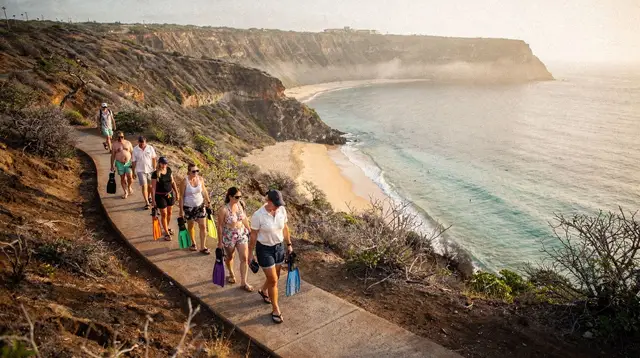
It’s not that Oahu is empty. A million people live here, and Honolulu never fully stops. But the visitor rhythm shifts. Trailheads that felt like a queue in July have a normal number of cars. I’ve hiked the ridge above Manoa Falls in September and passed maybe six other people the entire way. The lookout at Nuuanu Pali, which in peak summer can feel like a bus depot, had a handful of us leaning into that famous wind and actually hearing it.
Waikiki still has its rhythm — surf lessons at dawn, the beach filling in by ten — but the sidewalks on Kalakaua Avenue move at a walking pace instead of a shuffle. Restaurants that needed a reservation in August will often seat you same-day. It’s a small thing, but it changes how a trip feels day to day: less logistics, more island.
I try to build a September visit around the things that reward a calmer version of Oahu. A morning at Pearl Harbor, for instance, is always going to involve a reservation and a timed program, but the crowd waiting for the shuttle to the USS Arizona Memorial is noticeably thinner than it is in July. If you’re weighing a half-day there against folding in the rest of historic Honolulu, a guided run like a half-day Pearl Harbor and historic Honolulu tour covers the memorial and Iolani Palace territory without you having to plan the sequencing yourself, and in September you’re not fighting the same lines. For a longer day that also threads through downtown, there’s a Pearl Harbor and Honolulu city tour that pairs well with an afternoon you’d otherwise spend figuring out parking near Chinatown.
Evenings feel different too. I usually end a September trip with a luau rather than start one with it, because by then I’ve seen enough of the island to actually recognize the places being referenced on stage. Something like the Queens Waikiki Luau works well if you want to stay inside Waikiki and not deal with a long drive back in the dark, while the Mauka Warriors Luau or the Kaula Luau Show with an optional dinner add-on give you a different setting if you’re staying further from town. None of these fill up the way they do during the July rush, and I’ve had an easier time getting a September date within a day or two of arriving, rather than booking weeks ahead.
The one thing worth flagging
I won’t pretend September is risk-free. It falls inside the central Pacific hurricane season, which runs from June 1 through the end of November, and while a direct hit on Oahu is rare, tropical storms do form and occasionally track close enough to bring heavy rain, wind, or a genuine watch-and-wait day. It’s not a reason to avoid the month — it’s a reason to keep an eye on the forecast the week before you fly and to build in enough flexibility that a rescheduled boat tour or a rained-out hike doesn’t sink the whole trip. I treat it the way I’d treat any late-summer coastal trip anywhere in the world: pay attention, don’t panic, have a backup plan for one day.
If you’re trying to decide whether September beats the alternatives, I’d point you to how the island reads across the full-year comparison of winter versus summer and the broader best time to visit Oahu breakdown — both make the same case I’m making here, just with more structure and fewer opinions. And if budget is part of your calculus, that’s a separate conversation I’ve had in detail in what a week on Oahu actually costs, because the value of September isn’t really about price — it’s about the version of the island you get to see.
What September gives you, more than anything, is an Oahu that isn’t performing for anyone. The surf isn’t putting on a show, the whales haven’t arrived to be photographed, and the crowds that define an American summer have gone home. What’s left is just the island — warm, dry, a little quieter than usual, and, for a few weeks, entirely willing to let you in without a wait.
September on Oahu, your questions answered
Is September a good month to visit Oahu?
Yes. It sits in the dry season, so the weather is warm and stable, and it falls after the busy American summer travel weeks and before both the North Shore winter swell and humpback whale season begin, which makes beaches, trails, and popular sites noticeably calmer.
Will the North Shore have big waves in September?
No. The winter swell that produces the famous North Shore surf typically starts building in November and peaks December through February. In September, spots like Waimea Bay and Sunset Beach are generally calm enough to swim, and Haleiwa is in its quieter summer-season mode.
Can I see whales on Oahu in September?
Not typically. Humpback whales migrate to Hawaiian waters starting around November, with the main season running through May and peaking January to March. A September trip is not the time to plan around a whale sighting.
Does hurricane season affect a September trip to Oahu?
It can, in theory. Central Pacific hurricane season runs June 1 through November 30, and while Oahu is rarely hit directly, tropical storms occasionally pass close enough to affect a few days of weather. Check the forecast in the week before you travel and keep your plans flexible.
Are Oahu’s beaches and trails really less crowded in September?
In my experience, yes, compared to July and August. The heaviest mainland summer travel period has ended, so popular trailheads, lookout points, and reservation-based sites like Pearl Harbor tend to have shorter lines and more breathing room.
How does September compare to winter for a first Oahu trip?
September trades the dramatic North Shore surf and whale sightings of winter for calmer water, thinner crowds, and equally reliable weather. If those winter highlights matter most to you, aim for December through March instead; if you want an easier, quieter island, September is hard to beat.
Is it cheaper to visit Oahu in September?
This post is about atmosphere rather than pricing, and hotel and flight rates shift year to year, so I’d rather not guess a number here. For an honest look at what a trip actually costs, see the separate breakdown on the real cost of a week on Oahu.
Seasonal tours and activities on GetYourGuide
Verified deep-linked GetYourGuide tours. Book through these links and we earn a small commission at no cost to you.
GetYourGuide does not provide a product photo for this activity — the image shows the meeting point, photographed by us.