Whale watching on Oahu: seasons, boats, and departure points
Where and when can you go whale watching on Oahu?
Humpback whales pass Oahu roughly from December to April, with the most sightings in January through March. Boats leave from Kewalo Basin and Waikiki on the south shore and from harbors near Waianae and Ko Olina on the west side, where whales often travel closer to the coast late in the season.
A migration passes right by the island
Every winter, North Pacific humpback whales leave their feeding grounds in Alaska and swim roughly 3,000 miles to the warm, shallow waters around Hawaii to breed and calve. Oahu sits on that route, and for a few months each year the channels off the south and west shores carry a steady traffic of whales, visible from boats and, on a clear day, from several points on land.
This page is a starting point, not a calendar or a booking form for one specific dock. It covers the season in general terms, the kinds of boats you will choose between, the federal rule that governs how close any vessel can get, and the main areas people leave from. For a month-by-month breakdown of when whales are most and least likely to show up, see humpback season month by month. For the specific lineup of boats and packages leaving from Waikiki itself, see whale watching from Waikiki. And if a tour operator mixes whale watching with a dolphin encounter, read dolphin tours and the ethics question before you book — swimming with wild spinner dolphins is a genuinely contested practice, not a routine add-on.
When whales are around
The generally accepted window for humpback whales off Oahu runs from December to April, with the highest concentration of sightings from January through March. Early arrivals sometimes appear in November, and a few stragglers linger into May, but those are the edges of the season rather than the core of it. Nothing about this is exact: whales do not follow a printed schedule, and a slow week in February and a strong week in April both happen in real seasons. For the detail of which weeks tend to be busiest and how operators describe the shoulder months, see humpback season month by month rather than treating this page as the calendar.
Outside that window, from roughly May to November, humpback whales are not present off Oahu in meaningful numbers — they are back in Alaska. An operator advertising a whale-watching trip in July is either selling a dolphin or general ocean tour under a misleading name, or hedging with a “chance of sightings” disclaimer that visitors should read carefully.
Where the boats leave from
Three general areas cover most of the whale-watching departures on Oahu, and each suits a different kind of visitor.
Kewalo Basin and Waikiki, on the south shore, are the default choice for anyone staying in Waikiki without a rental car. Kewalo Basin Harbor sits a short taxi or rideshare ride from most Waikiki hotels, and some trips depart directly from piers along Waikiki itself. The advantage is convenience: no long drive, short transfer time, and easy pairing with a morning or afternoon already spent in the neighborhood. The tradeoff is that boats leaving from here often spend part of the trip transiting to whale-frequented water rather than starting right in it. For the specific operators and package types based here, see whale watching from Waikiki; for sunset and dinner-cruise options that sometimes overlap with whale season, see sunset cruises from Waikiki and catamaran sailing off Waikiki.
West Oahu, near Waianae and Ko Olina, is the other main option. The channel between Oahu and Kauai and the waters off the Waianae coast are known humpback habitat, and late in the season whales are often reported closer to shore here than off Waikiki. Boats based near Waianae Small Boat Harbor or Ko Olina’s marina can reach that water faster, which sometimes means more time actually watching and less time transiting. The tradeoff runs the other way: getting to a west-side departure point from Waikiki takes close to an hour by car in normal traffic, longer at peak times, and this side of the island has less bus coverage than the south shore, so a rental car or arranged transfer is close to essential.
a small-boat whale-watching trip departing from the west side, closer to the waters whales favor late in the seasonNeither area is objectively better. A west-side departure trades a longer drive for a shorter run to the whales; a south-shore departure trades a longer boat transit for an easy walk or short ride from your hotel. If you are building a full day out of the trip — pairing it with the North Shore or a west-side beach day — the drive to Waianae or Ko Olina costs you little extra. If whale watching is a standalone morning slotted between other Waikiki plans, the south shore keeps the day simpler.
Catamaran or small boat
Operators generally run one of two boat types, and the choice changes the experience more than the departure point does.
| Catamaran | Small rigid-hull boat | |
|---|---|---|
| Passengers | Larger groups, tens of people | Smaller groups, often a dozen or fewer |
| Stability | Steadier in swell, less motion | Sits lower, feels more of the ocean’s movement |
| Amenities | Shade, seating, sometimes a bar or restroom | Minimal — expect an open deck and spray |
| Best for | Families, seasickness-prone travelers, a relaxed pace | Visitors wanting a closer, more active feel |
| Speed and maneuvering | Slower to reposition | Can reach whale-active water faster |
A catamaran is the safer default for most visitors, particularly with children or anyone unsure how they handle ocean swell. A small boat suits people who want to feel closer to the water and don’t mind a firmer ride — and because these boats often move faster, they can sometimes cover more water in the same 2 to 3 hours, which matters when whales are scattered rather than concentrated in one channel.
a standard humpback-watching cruise with a naturalist guide narrating the migration and behavior on boardThe 100-yard rule
Every boat on the water, regardless of operator or size, is bound by the same federal approach limit. NOAA regulations protecting humpback whales in Hawaii require vessels to stay at least 100 yards (roughly 90 meters) from any whale, to avoid intercepting a whale’s path, and to slow to idle speed if a whale surfaces closer than that by its own movement. Operators cannot chase, encircle, or close in on a pod for a better photo — and a good one will say so upfront rather than treat the distance as an inconvenience.
In practice this means sightings are often at a real but comfortable distance: a spout, a dorsal fin, a tail rising before a dive, sometimes a full breach some way off. Photographers hoping for frame-filling close-ups should adjust expectations, or ask about trips with a longer zoom lens policy on board. It also means no legitimate operator can promise a close encounter — anyone who does is either overstating what they can deliver or planning to break the rule.
What a trip costs
Prices vary by boat type, trip length, departure point, and whether the tour is bundled with something else — a meal, a hula show, snorkeling, or a dolphin-watching segment. Because rates change operator to operator and season to season, check current pricing directly with the tour before booking rather than relying on a number printed somewhere else. As a general pattern: a standalone 2-hour whale-watching cruise tends to sit at the lower end of the range for boat tours on Oahu, while a longer combination trip with extras — like a whale-watching and snorkeling package, or a sunset sail with a show — runs higher.
a Waikiki whale-watching cruise paired with a hula performance on board a combination trip that adds dolphin watching, turtle snorkeling, and a waterslide to the whale-watching segmentWhatever the sticker price, remember that Hawaii’s general excise tax adds a few percent on top, and that boat tours sometimes list a fuel surcharge separately. None of that is unique to whale watching, but it is worth building into a broader Oahu budget if you are pricing out a winter trip.
Choosing based on where you’re staying
If you are based in Waikiki without a car, the practical choice is a Kewalo Basin or Waikiki departure — see whale watching from Waikiki for the specific lineup. If you already have a rental car and are spending part of your trip on the west side or planning a day around Ko Olina, a west-side departure is worth the drive, especially in February and March when whales are frequently reported closer to that coast. If your visit falls in winter and you want whale watching folded into a broader plan rather than booked as a single activity, the winter Oahu whales and surf itinerary lays out how to pair it with North Shore surf season and other cold-season highlights, and winter versus summer on Oahu covers how the whole island’s weather and crowd patterns shift with the season.
a full-day island tour that can be timed to include a coastal stretch where whales are sometimes visible from shore
Watching from land
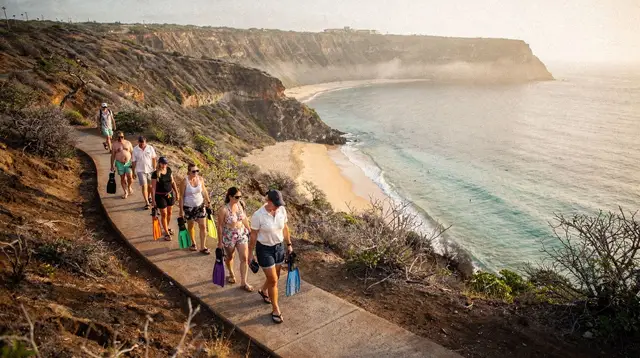
A boat is not the only way to see a humpback whale off Oahu. Shoreline lookouts along the island’s southeast coast, and other elevated points facing open water, give free views in season, particularly on calm, clear mornings when the ocean surface is easy to scan. Land-based sightings are less reliable than a boat trip — you are watching a much larger stretch of ocean with the naked eye rather than a guide actively tracking movement — but they cost nothing and require no booking. If a coastal hike or drive is already part of your plan, keep an eye on the water rather than treating it as a separate errand.
Planning around the rest of your trip
Whale watching pairs naturally with other winter activities on Oahu, and with general trip planning. For the wider question of when to visit the island at all, best time to visit Oahu weighs whale season against surf season, rain patterns, and crowd levels. For families weighing a boat trip against a beach day, family-friendly beaches on Oahu covers calmer alternatives if a 2- to 3-hour boat ride with young children feels like too much for one day. And for the full range of tours and activities grouped under this theme, the whale and dolphin watching category page lists more options across departure points and price ranges than fit on a single guide.
FAQ: whale watching on Oahu
When is whale watching season on Oahu?
Humpback whales are typically seen off Oahu from December to April, with sightings peaking from January to March. A handful of early or late whales show up outside that window in most years, but treat those as the exception rather than something to plan around.
Is a whale sighting guaranteed?
No responsible operator guarantees a sighting. Whales are wild animals on a migration, not a scheduled attraction, and any trip description that promises whales on every departure should raise a flag rather than reassure you.
How close can a boat legally get to a whale?
NOAA rules set a minimum approach distance of 100 yards for vessels around humpback whales in Hawaii waters. Boats are required to slow down, avoid crossing a whale’s path, and keep that distance rather than closing in for a better view, regardless of how the trip is marketed.
How long does a whale-watching trip last?
Most Oahu whale-watching trips run 2 to 3 hours, whether by catamaran or by smaller rigid-hull boat. Combination trips that add snorkeling, a meal, or a hula show tend to run closer to 3 hours, or longer.
Should I book from Kewalo Basin, Waikiki, or the west side?
Kewalo Basin and Waikiki are the easiest departure points if you are staying in Honolulu and want a short transfer without a car. West Oahu departures near Waianae and Ko Olina put you closer to areas whales favor later in the season, at the cost of a longer drive to reach the dock.
Catamaran or small boat: which is better for whale watching?
A catamaran is steadier, has more deck space and shade, and suits families or anyone prone to seasickness. A small rigid-hull boat sits lower and closer to the water, carries fewer passengers, and can maneuver faster, which some visitors prefer for a more active feel.
How much does a whale-watching tour cost on Oahu?
Prices vary by operator, boat type, and trip length, so check current rates directly with the operator before booking rather than relying on a fixed figure. Combination trips that add snorkeling, a meal, or a show generally cost more than a standalone whale-watching cruise, before the general excise tax that applies on top.
Can I see whales from land instead of a boat?
Yes. Shoreline lookouts along the southeast shore and other coastal points offer free whale watching in season without a boat trip, though sightings from land are less predictable than from the water since no guide is actively tracking movement for you.
Whale and dolphin watching cruises on GetYourGuide
Verified deep-linked GetYourGuide tours. Book through these links and we earn a small commission at no cost to you.
GetYourGuide does not provide a product photo for this activity — the image shows the meeting point, photographed by us.