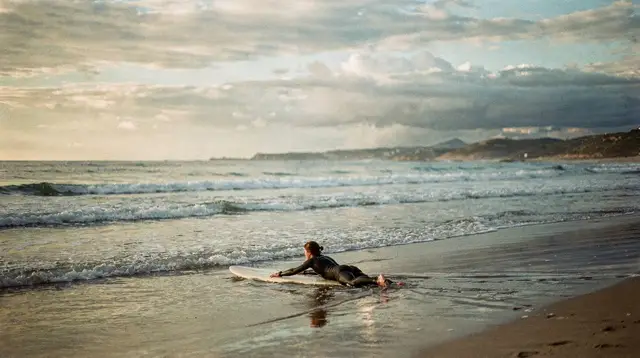
Paddleboarding in Waikiki
Is Waikiki good for stand up paddleboarding?
Yes, for beginners specifically. The offshore reef breaks up most swell, so the water inside it is often flat, especially in the morning before the trade winds pick up. It is not a wave or distance paddling spot.
Why Waikiki works for beginners
A barrier reef runs a short distance offshore along most of Waikiki Beach. It breaks up incoming ocean swell before it reaches the shallow water closer to the sand, which is also why Waikiki is Oahu’s best-known spot for beach surf lessons in the first place. For stand up paddleboarding, the same reef effect matters even more: flat, reef-calmed water is what lets someone stand up on a wide board and stay upright without much prior balance training.
This is worth stating plainly because it shapes what Waikiki paddleboarding is and is not. It is a place to learn the basic stroke, get comfortable standing, and paddle along a calm stretch of water close to shore. It is not a wave-riding SUP spot, and it is not a distance or fitness paddling route out into open water. Paddlers chasing either of those go elsewhere on the island. If open-water paddling to a sandbar or between islets is the goal, see kayaking to the Mokulua islets from Kailua or the Kaneohe sandbar tours, both of which are different stretches of coast with different conditions.
Rental vs. lesson: two different things
Waikiki Beach has a cluster of beach concessions, mostly along the same stretch used by the Waikiki beach surf lessons operators, roughly between the Duke Kahanamoku statue and Kuhio Beach. These concessions generally offer two separate products, and it helps to know which one you are booking.
Self-guided rental. You pick up a board and paddle, get a brief safety rundown, and go out on your own for a set block of time — typically sold by the hour. This suits someone who has paddled before, whether at Waikiki or elsewhere, and just wants beach time without instruction.
Guided lesson. An instructor works with you in the water, corrects your stance, shows the paddle stroke, and keeps you within the calmer inshore zone. Lessons run for a fixed duration and are the better starting point for a first-timer, since the technique corrections in the first few minutes shorten the learning curve noticeably compared to figuring it out alone.
a 2.5-hour guided SUP lesson in Waikiki covers exactly this instructed format, with equipment included and an instructor in the water alongside beginners.
This page is not a general comparison of renting versus booking a guided outing across Oahu — for that broader question, including motorized and multi-day considerations, see rentals vs. guided tours.
Typical rental and lesson structure
| Format | Typical duration | What’s included | Best for |
|---|---|---|---|
| Self-guided board rental | By the hour | Board, paddle, leash, brief safety talk | Paddlers with prior experience |
| Guided SUP lesson | Around 2 to 2.5 hours | Board, paddle, instructor, in-water coaching | First-timers |
| Combined surf and SUP rental counters | Varies | Choice of board type at the same stand | Either, depending on what’s picked |
Prices vary by operator, season, and how busy the beach is on a given day. Treat any number you see as a starting point to confirm at booking rather than a fixed rate — rental and lesson pricing at Waikiki concessions has shifted in recent seasons, and the counters themselves are the accurate source on the day.
Best time of day for flat water
The reef handles the swell, but wind is a separate factor, and it is the one that changes through the day. Oahu’s trade winds blow from the northeast on most days of the year, and they typically build through the late morning and peak in the afternoon. Early morning — generally before 10 or 11 a.m. — is when Waikiki’s water tends to be flattest and easiest to paddle, before the wind adds chop on top of the reef-calmed swell.
This isn’t a hard rule for every single day: on lighter wind days the water can stay calm well into the afternoon, and on windier stretches, particularly outside the main trade wind pattern, mornings can be choppier too. But as a planning default, booking a morning slot — whether a rental or a lesson — gives better odds of the flat, easy conditions that make Waikiki appealing for paddleboarding in the first place.
What a first session actually feels like
For someone who has never stood on a paddleboard, the sequence is usually straightforward. You start kneeling on the board in shallow water, paddle out a short distance, then stand up one foot at a time with the paddle across the board for balance. The board is wide and stable compared to a surfboard, and the shallow reef flat means that if you fall — which most beginners do at least once — you’re often standing in waist-deep or chest-deep water rather than swimming.
Basic swimming comfort is expected even so: you should be able to fall off, right yourself, climb back on, and continue without difficulty. Lifeguards patrol Waikiki Beach, and the concessions keep instruction and rental activity within a defined nearshore zone, but neither substitutes for basic water confidence.
Board types and gear differences
Not every board at a Waikiki concession is the same shape. Rental fleets generally carry a few variations, and knowing the difference helps you ask for the right one at the counter.
All-around boards. Wide, thick, and stable — the default choice for a first-timer or anyone renting for casual beach time. These prioritize standing balance over speed, which matches exactly what Waikiki’s flat, reef-calmed water rewards.
Touring or fitness boards. Narrower and longer, built to hold a straighter line and move faster through the water. These suit someone who already has SUP experience and wants a workout rather than a first lesson, though Waikiki’s short, protected stretch of water isn’t really built for long-distance touring in the first place — see kayaking to the Mokulua islets or the Kaneohe sandbar tours for that kind of distance paddling elsewhere on Oahu.
Inflatable vs. hard boards. Some concessions rent inflatable SUPs, which are more forgiving if bumped against another board or a swimmer in a crowded lineup, though most Waikiki beach rentals are still hard epoxy boards for the hour-by-hour crowd. If a specific type matters to you, ask when booking rather than assuming — fleets vary by operator and by season.
Paddle length also matters more than most first-timers expect: a paddle that’s too short forces you to hunch, while one that’s too long throws off your stroke. Concession staff typically size the paddle to your height as part of the rental or lesson setup, so mention your height if it isn’t asked.
Safety, etiquette, and sharing the water
Waikiki’s nearshore water gets busy. The same reef-protected stretch that makes paddleboarding approachable also hosts beach surf lessons, outrigger canoes, swimmers, and other SUP renters, often all within the same few hundred meters of water. A few habits keep a first session smooth rather than stressful:
- Stay within the marked or informally understood nearshore zone that concessions use for rentals and lessons — this is also where lifeguards keep the closest watch.
- Give surfers and canoe paddlers right of way where lineups overlap; a stand up paddleboard is taller and more visible than a surfer lying on a board, so it’s on the SUP rider to watch and yield, not the other way around.
- Keep the leash attached. Most rentals include one, and it keeps a dropped board from drifting into a swimmer or another paddler if you fall.
- Watch for outrigger canoes and catamaran traffic, which move faster than a paddleboard and use the same general nearshore corridor, particularly near the catamaran sail launch points along the beach.
None of this requires advanced skill — it’s closer to the kind of shared-space awareness anyone develops in the first few minutes on the water — but it’s worth knowing before paddling out rather than figuring it out mid-session.
Paddleboarding with kids and families
Waikiki’s calm, shallow, reef-protected water makes it one of the more approachable spots on Oahu to introduce a kid to paddleboarding, especially compared with open-water or wave-exposed launch points elsewhere on the island. Many concessions will let a capable swimmer old enough to follow instructions try a lesson or a supervised rental, though age minimums and comfort levels vary by operator — ask directly when booking rather than assuming a young child is automatically included.
A common family pattern is to pair a short SUP session with time at the beach itself, since Waikiki sits inside the broader run of family-friendly beaches on Oahu and the paddling area is a short walk from hotel pools and sand. For a fuller family itinerary that includes water time without a lot of logistics, see the Oahu with kids guide or the five-day Oahu itinerary for families.
Weather, seasons, and when to skip it
Oahu runs on two broad seasons: a drier stretch roughly May through October and a wetter one roughly November through April, though Honolulu’s winter days still commonly reach into the mid-70s Fahrenheit, so cooler weather rarely rules out a session on its own. The bigger variable for paddleboarding specifically is wind, not rain or temperature — see the best time to visit Oahu guide for the fuller seasonal picture.
The Pacific hurricane season runs roughly June through November, and while direct hits on Oahu are rare, a nearby system can bring rough surf and strong wind that make paddleboarding unsafe for a day or more even under otherwise sunny skies. Check conditions and any posted beach advisories on the day, and see the hurricane season guide for how that risk is typically handled during a trip. Concessions and lifeguards will call off rentals and lessons when conditions warrant it, which is a signal worth respecting rather than working around.
Combining it with the rest of a Waikiki day
Paddleboarding sessions at Waikiki typically run an hour or two, which leaves the rest of a beach day open. Many visitors pair a morning SUP session with an afternoon at the beach, a sunset cruise, or one of the other water sports available directly on Waikiki Beach, including parasailing departures that run from the same general stretch of coast.
Waikiki parasailing departs from the same beach area and is a common add-on for visitors who want a second water activity on the same day, though it’s a motorized outing rather than a paddling one.
For a broader first day on Oahu that includes time on the water, a one-day Waikiki itinerary without a car works well since none of Waikiki’s beach activities, including SUP, require a rental vehicle — everything is within walking distance of most Waikiki hotels.
If your trip includes more of the island beyond the beach, a full-day circle island tour from Waikiki covers Oahu’s coastline on land the same week, which pairs naturally with a water-focused morning.
Visitors curious about whale season can also combine an early SUP session with an afternoon Waikiki whale watching boat tour, relevant roughly November through May when humpbacks are present offshore — see the whale watching guide for the seasonal detail.
What to bring and wear
Reef-safe sun protection matters: Hawaii state law has banned the sale of sunscreens containing oxybenzone or octinoxate since 2021, so pack or buy a mineral sunscreen (zinc oxide or titanium dioxide) rather than assume any sunscreen will do. A rash guard or swimsuit, a hat that will stay on (or a strap), and reef-safe sunscreen reapplied after time in the water cover most of what’s needed. Concessions supply the board, paddle, and usually a leash; some also offer dry bags for phones and keys, worth asking about since Waikiki’s rental counters are steps from the sand with no formal storage.
Booking ahead
Waikiki’s SUP concessions are numerous enough that walk-up rentals are usually available, especially outside of peak midday hours. Lessons, particularly with well-reviewed instructors, benefit from booking a day or more ahead, especially in the busier summer months when the same instructors and boards are also serving the beach’s surf lesson demand. For general guidance on what tends to sell out on Oahu and how far ahead to plan, see what sells out and when to book.
Paddleboarding at Waikiki: frequently asked questions
Do I need experience to paddleboard at Waikiki?
No. The reef-protected water is calm enough that first-timers stand up within a few minutes in a lesson, and many rental counters will give a five-minute briefing even without a booked class.
What is the best time of day to paddleboard in Waikiki?
Early morning, generally before 10 or 11 a.m., before the northeast trade winds build. Afternoons are choppier and harder to paddle against, even though the reef still tames the swell itself.
How much does SUP rental cost in Waikiki?
Beach concessions typically rent boards by the hour, with rates that change by season and operator. Confirm the current price at the counter or on the operator’s page rather than relying on a fixed figure.
Should I rent a board myself or book a lesson?
A rental suits someone who has paddled before and just wants beach time. A lesson suits a first-timer: an instructor corrects your stance and paddle technique in the first few minutes, which shortens the learning curve considerably.
Where on Waikiki Beach do the SUP concessions operate?
Along the same stretch used by surf schools, roughly between the Duke Kahanamoku statue area and Kuhio Beach, with several independent stands and hotel-affiliated counters within easy walking distance of each other.
Can I paddleboard at Waikiki without swimming ability?
Basic swimming comfort is expected. The water is shallow over much of the reef flat and lifeguards patrol the beach, but you should be able to fall off, right the board, and get back on without panic.
Is Waikiki good for SUP surfing or long-distance paddling?
Not really. Waikiki’s appeal is calm, protected water suited to balance and first strokes. Paddlers looking for waves or open-water distance paddling generally look elsewhere on Oahu.
Kayak and paddleboard outings on GetYourGuide
Verified deep-linked GetYourGuide tours. Book through these links and we earn a small commission at no cost to you.
GetYourGuide does not provide a product photo for this activity — the image shows the meeting point, photographed by us.