Pearl Harbor as a visit, not a checklist item
I have stood on the USS Arizona Memorial three times now, and each time I have left with the same split feeling: moved by what I saw, and slightly annoyed by what it took to see it.
That contradiction is the actual subject of this piece, because most write-ups about Pearl Harbor pick one side. Either the memorial gets described in reverent, hushed tones, as if the whole morning unfolds like the ten minutes you spend on the boat itself. Or it gets reduced to a logistics puzzle: book eight weeks out, arrive early, mind the bag policy, don’t miss your shuttle window. Both descriptions are accurate. Neither is complete.
What the memorial actually delivers
The Navy runs a small boat out to the white structure that spans the sunken hull of the USS Arizona, and for the few minutes you’re aboard, it works. People stop talking. Some of that is imposed by the setting — a slick of fuel still rises from the wreck below, decades later, and more than a thousand sailors remain entombed in the ship beneath your feet. Some of it is the structure itself, which was designed to sag in the middle as a quiet visual nod to the mourning. Whatever the mechanism, it lands. I’ve watched strangers who arrived joking in the security line go quiet without anyone telling them to.
That part of the visit does what it’s supposed to do. It’s not staged. It doesn’t need embellishment, and the site doesn’t add any — there’s no narration piped in while you’re out on the water, just the wind and the boat engine and, underneath, the shape of a battleship.
Where the day pulls the other way
The problem is that this quiet, contained experience is bookended by everything else Pearl Harbor has become: one of the most visited sites in the state, run through a reservation system, a bag policy, and a security screening that treats every visitor like a first-time flier. None of that is unreasonable for a working military installation that also happens to be a memorial. But it does mean the emotional center of the visit — those minutes on the water — arrives after a chunk of time spent in lines, and the two don’t blend well.
I’ve talked to visitors who came away disappointed, and almost none of them were disappointed by the memorial itself. They were disappointed by the mismatch between what they expected and what they got: a expected a solemn morning, and instead got a logistics exercise with a solemn morning embedded somewhere inside it. A few had shown up without a reservation, assuming a national memorial wouldn’t really turn people away, and were told, correctly, that it would. That’s a real risk here in a way it isn’t at most sites — arrive unprepared and you may not get onto the water at all, memorial closed to you, hull unseen, whole trip out reduced to the museum buildings and the film.
I don’t think the fix is to over-plan the emotional experience, though. I’ve seen visitors treat the whole morning like a checklist — reservation confirmed, bag rules followed, film watched, shuttle taken, boat ridden, photo taken, done — and come away having technically completed Pearl Harbor without having really visited it. The site rewards a slower posture than that, even inside a schedule that isn’t built to allow one.
The scale problem no one mentions
There’s a second tension that gets less attention: Pearl Harbor is a memorial to a specific, terrible morning in 1941, but it’s also visited by roughly a million and a half people a year, most of them funneled through the same reservation slots and the same narrow window of shuttle departures. A site built around collective grief doesn’t scale gracefully to mass tourism, and you feel that friction directly — in the size of the crowd waiting for the same boat, in the pace at which everyone is moved along, in how little room there is to simply stand and look longer than your allotted few minutes.
None of this is a criticism of how the National Park Service runs it. I don’t know a better way to manage that many people through a working harbor and an active memorial without a system this rigid. But it’s worth naming plainly rather than pretending the whole day floats free of the crowd it’s actually part of, because expecting otherwise is exactly what produces the disappointment I keep hearing about.
What I’d tell someone before they go
Plan on the morning taking longer than feels proportionate to the ten minutes at the center of it, and don’t treat that as a flaw to route around — the waiting is part of what today’s Pearl Harbor is, whether or not it matches the version in your head. Expect the security line, expect the crowd, and let the memorial itself, when you finally reach it, do the work it’s built to do. It generally will.
It’s also worth remembering that Pearl Harbor is one morning out of a trip, not the whole trip, and that the rest of Oahu operates at a completely different pace once you’re past the harbor gates. Trail conditions and safety basics elsewhere on the island are covered separately in Risk and rescue on Oahu’s trails, and if this is your first stretch away from the hotel strip, Waikiki is not the whole island is a useful reset on how much of the island exists beyond it.
Getting there, and deciding how much time to give it
Pearl Harbor sits on the leeward side of the island, a real drive from the Waikiki hotel strip, which is part of why the morning feels longer than the ten minutes on the water would suggest. If you’re staying without a car, Getting from Waikiki to Pearl Harbor walks through the shuttle and rideshare options, and more broadly Getting around Oahu without a rental car covers how the island’s transit fits together. Flying in that same morning is possible but tight — Honolulu airport transfers has the realistic timing.
The biggest planning decision is how much of the site to see. The memorial itself is free, but the neighboring battleship and submarine museums are paid add-ons, and whether they’re worth the extra hours depends on how deep you want to go. Pearl Harbor breaks down what each option actually includes, and USS Missouri and USS Bowfin: Pearl Harbor’s other two ships covers the two museum ships specifically. General ticket logistics — what’s included, what’s separate — are in USS Arizona Memorial tickets, and the booking-window pressure mentioned above is part of a wider pattern covered in What to book ahead on Oahu before it sells out.
If you’re weighing a guided option against doing it yourself, Pearl Harbor tours lays out what a tour adds versus a self-arranged reservation, and Private guide or group tour covers that tradeoff more generally across the island. Traveling with children changes some of the calculus around the security process and the wait — Pearl Harbor with kids is worth reading before you book if that applies to you.
For a second view of that morning’s logistics without a car, a guided city tour that bundles Pearl Harbor with historic downtown Honolulu is one way to skip the transit question entirely — Pearl Harbor: Honolulu City Tour combines the memorial with stops most self-drive visitors skip. And for anyone landing at HNL and heading straight there before checking into a hotel, Pearl Harbor: USS Arizona Tour from Honolulu Airport is built around that exact timing.
Where this fits in a longer Oahu trip
None of this needs to happen in isolation. One day pairs the memorial with the rest of downtown Honolulu — Chinatown, Iolani Palace, the Bishop Museum — so the paid-attraction hours don’t feel like the whole day. If this is your first trip to the island, Planning your first trip to Oahu: what to know before you go and Three days on Oahu for first-timers both place Pearl Harbor as one stop among several rather than the centerpiece, which matches how most visitors actually experience it. Budget-minded travelers weighing where the money goes across a full trip might also find What a week on Oahu actually cost me useful context, and if you’re deciding whether a rental car makes sense for this leg of the trip, Rental car or not on Oahu covers that decision directly.
Pearl Harbor visit: questions people actually ask
Is the USS Arizona Memorial worth the hassle of reserving ahead?
Yes, in the sense that the alternative is often not getting onto the water at all. The reservation system exists because demand outstrips the number of people the Navy shuttle can move; treating it as optional is the single most common reason visitors miss the memorial. Booking a guided Pearl Harbor and historic Honolulu half-day tour is one way to lock in a reserved boat slot without navigating the park’s own booking window yourself.
How long does a full Pearl Harbor visit take?
Longer than most people budget. Between the reservation window, the security screening, the film, the shuttle out and back, and the museum buildings, a full visit fills the better part of a morning, and that’s before adding any of the paid neighboring attractions.
Why does the memorial feel more moving than the rest of the visit?
Because the two are built differently. The memorial is a small, contained space designed around a single sunken ship and a fixed amount of time on the water. Everything around it — the visitor center, the queues, the security process — is designed around volume and flow. The contrast is real, not imagined.
Is it disrespectful that Pearl Harbor is also a major tourist attraction?
That tension is worth sitting with rather than resolving too quickly. It’s simultaneously an active military memorial, a mass gravesite, and one of the most visited sites in the state, and those identities don’t fully reconcile. Most visitors I’ve spoken with land somewhere similar: uneasy about the scale, still glad they went.
What if I show up without a reservation?
You may still see the museum buildings and the film, but access to the memorial boat itself is not guaranteed and is often simply unavailable same-day. This is the most common source of visitor disappointment on the site.
Does the experience feel different depending on the time of day?
Crowd size and wait times shift through the day, and that does affect how much room there is to simply stand and take the site in rather than being moved along with the group. It doesn’t change what the memorial itself delivers once you’re on the water.
Is Pearl Harbor appropriate for a casual, one-stop-on-the-itinerary visit?
It can be visited that way, logistically, but the site tends to reward people who arrive expecting something closer to a memorial than an attraction. Going in with that framing changes how the morning lands, even though the schedule itself doesn’t change.
tours.Opinion
Verified deep-linked GetYourGuide tours. Book through these links and we earn a small commission at no cost to you.
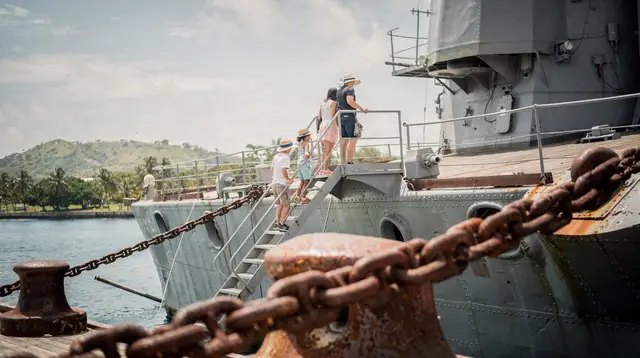
GetYourGuide does not provide a product photo for this activity — the image shows the meeting point, photographed by us.